
Shed Inspection Report
1. Foundation — Inadequate Base Support
MODERATELoose #4 stone, undersized pad, corner framing offset. Perimeter support deficiency. Needs re-leveling and pad extension.
2. Roof Framing — Ridge & Rafter Connections
HIGHDamaged ridge board splice, uneven rafter bearing, improvised gussets, no visible rafter ties. Strongest structural concern.
3. Wall-to-Roof Enclosure Gap
HIGH1–2 inch continuous gap, daylight visible through wall. Building envelope incomplete.
4. Door Assembly — Framing & Sealing
HIGHOversized rough opening, daylight through jamb, unsupported threshold, wrong hardware.
5. Roof Sheathing Gaps
MODERATE1/4"–1/2" gaps in roof panels, underlayment visible, improvised patch strips.
6. Subfloor Panel Gaps
MODERATE1/4"+ gaps throughout, worst at entry threshold. Sloppy fit and moisture entry point.
7. Gutter/Drainage + Electrical
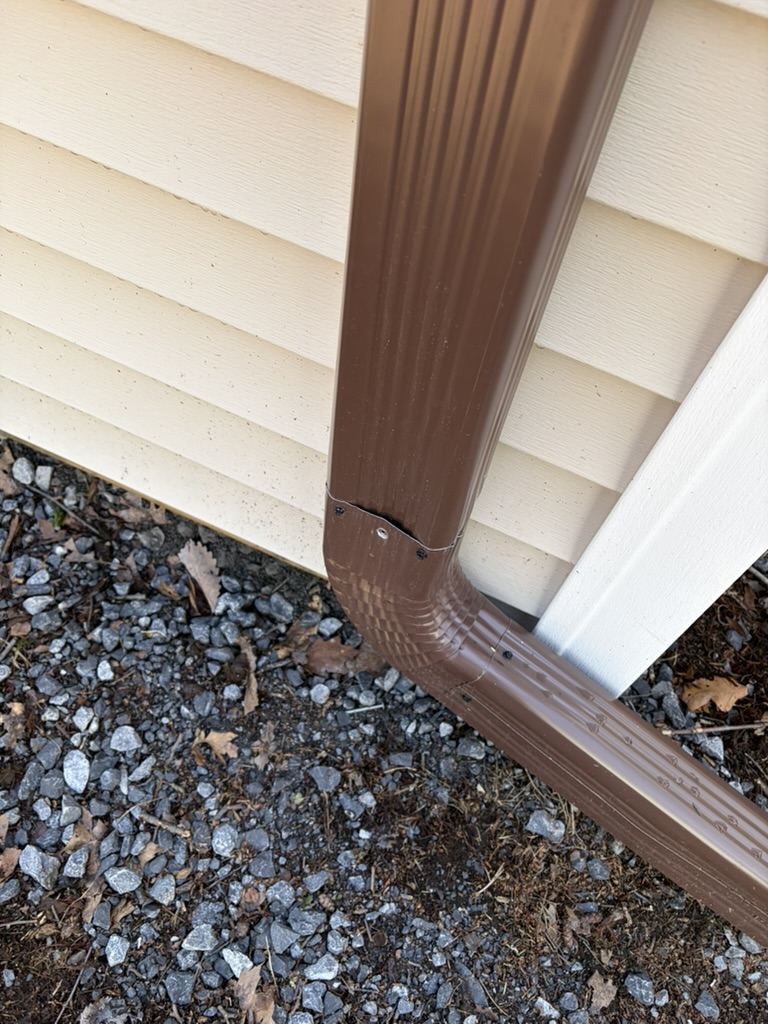
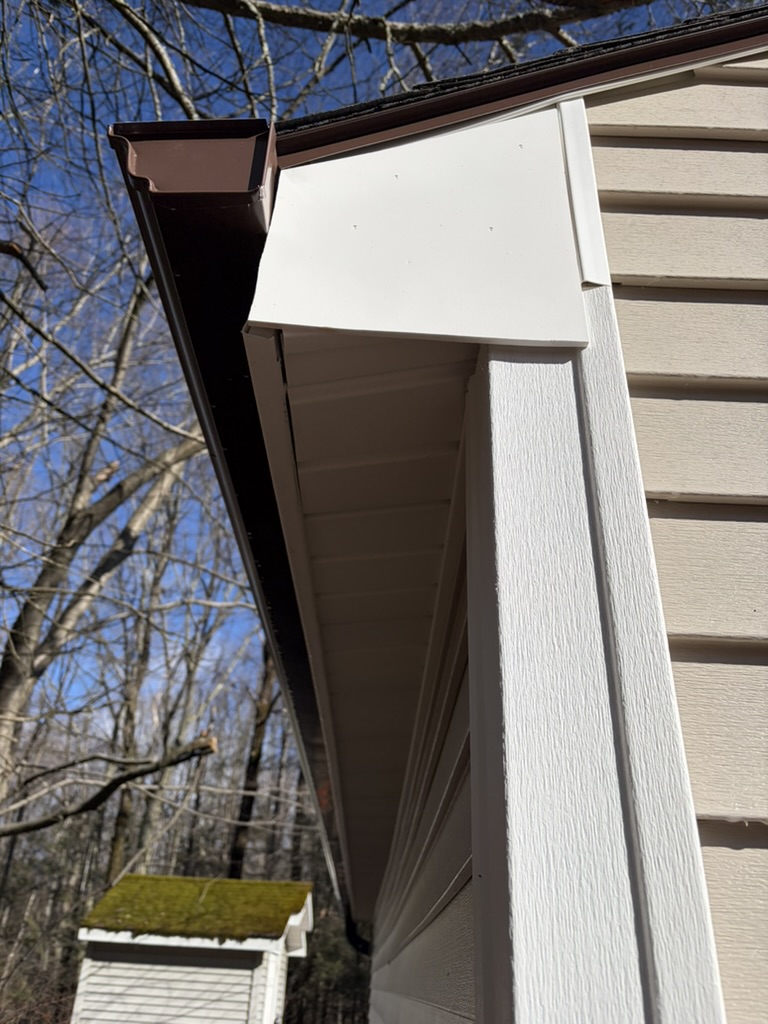
HIGHLeaking gutter joint directly over exterior light fixture. Electrical safety concern.
8. Skylight Framing
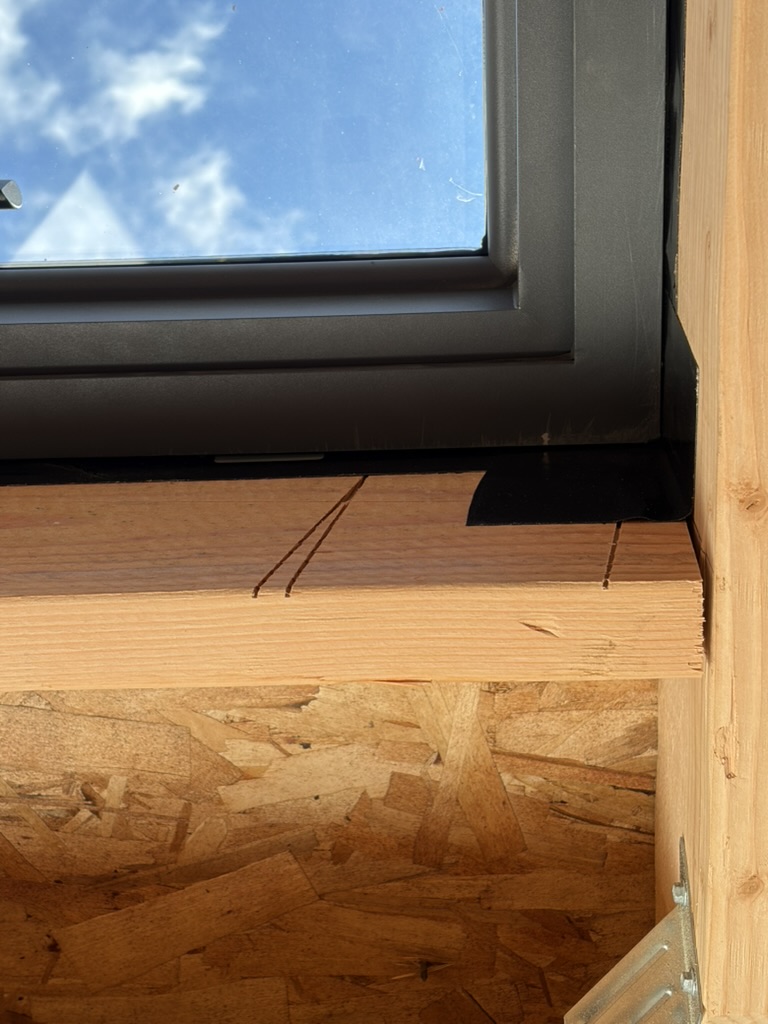
MODERATESaw kerfs in support member. Field adjustment to force skylight fit.
9. Minor Finish & Workmanship
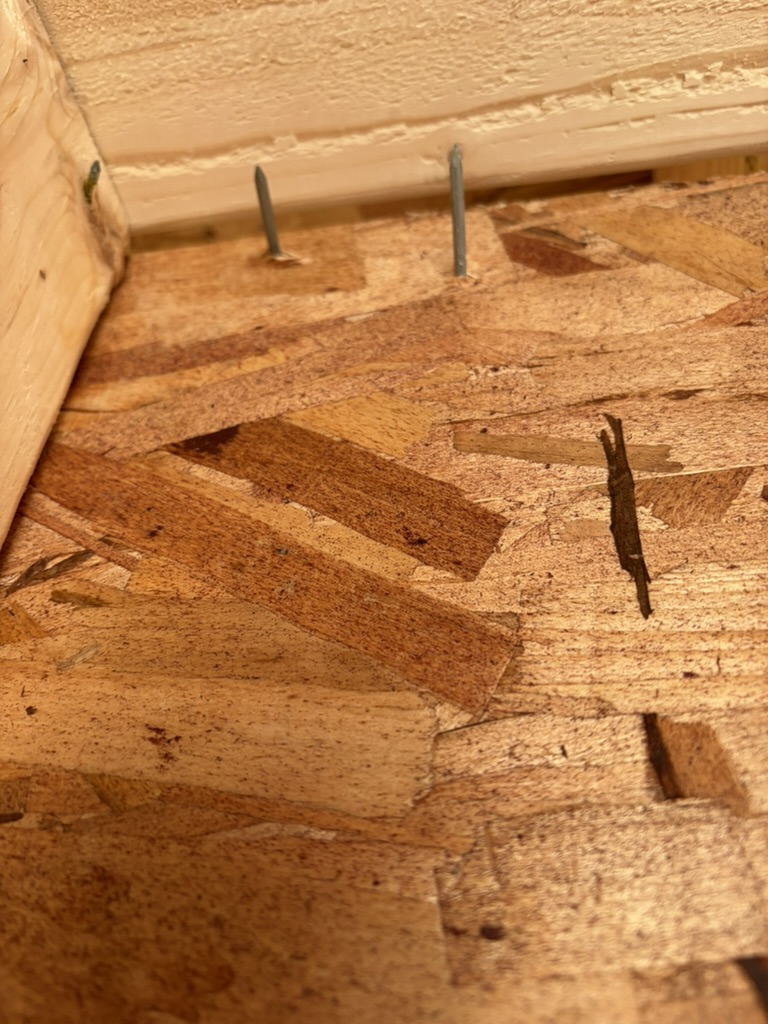
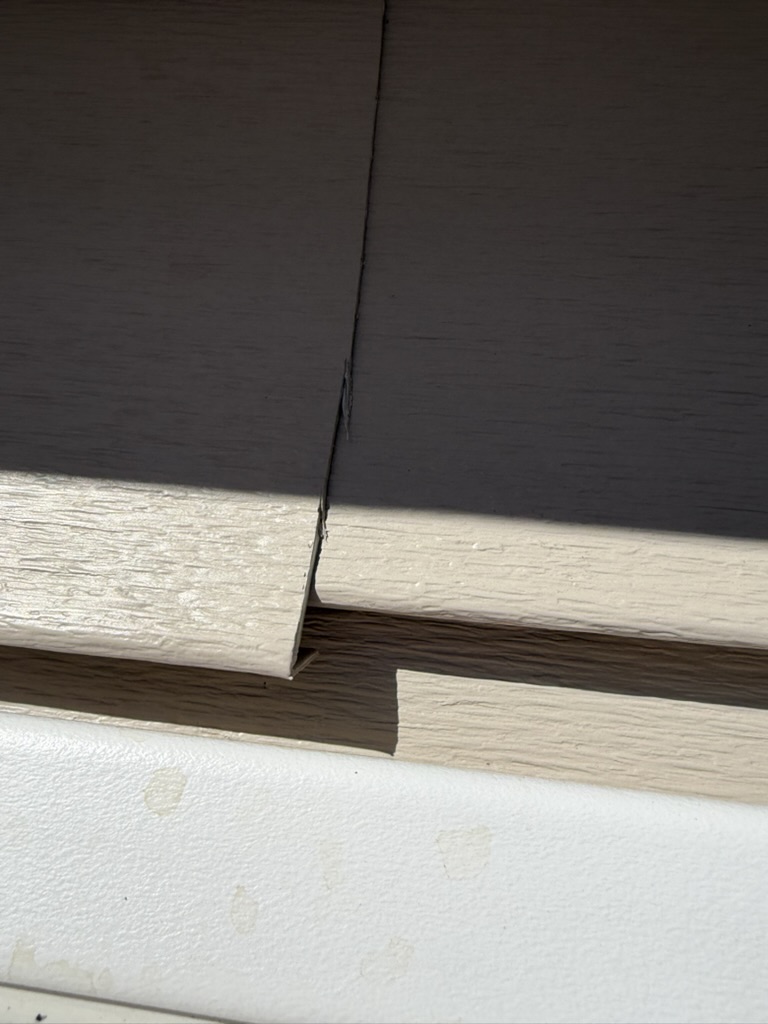
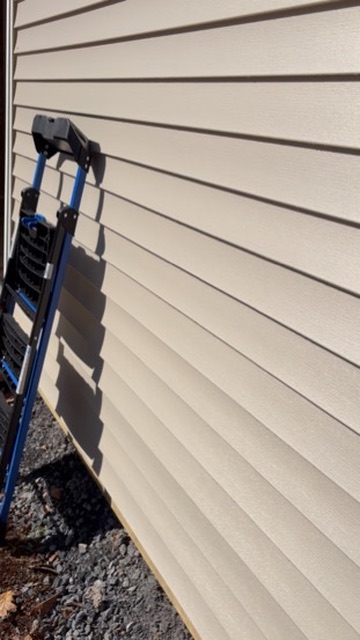
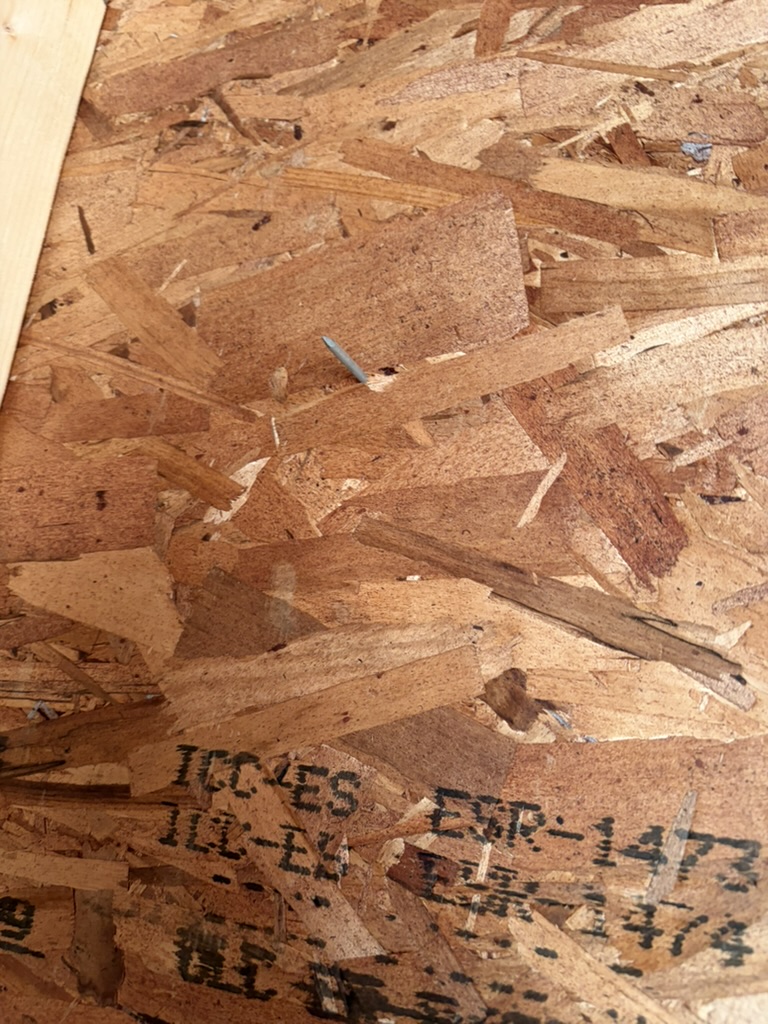
LOWWavy siding, protruding nails, debris left at completion. Pattern of poor workmanship.
Detailed Findings
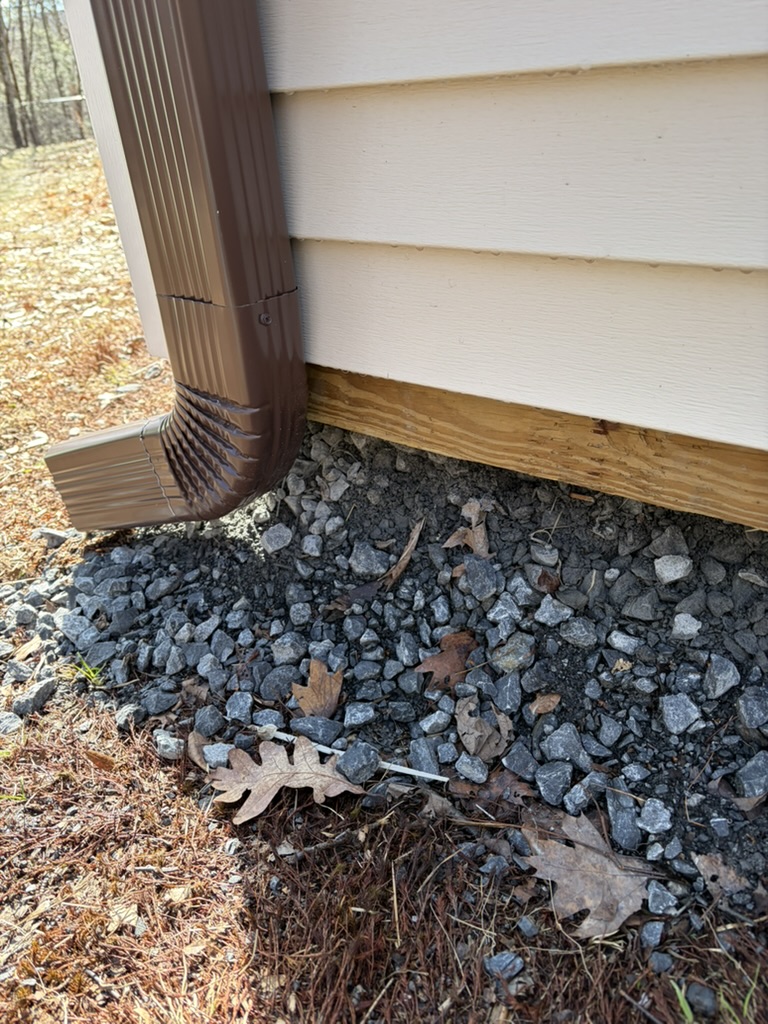
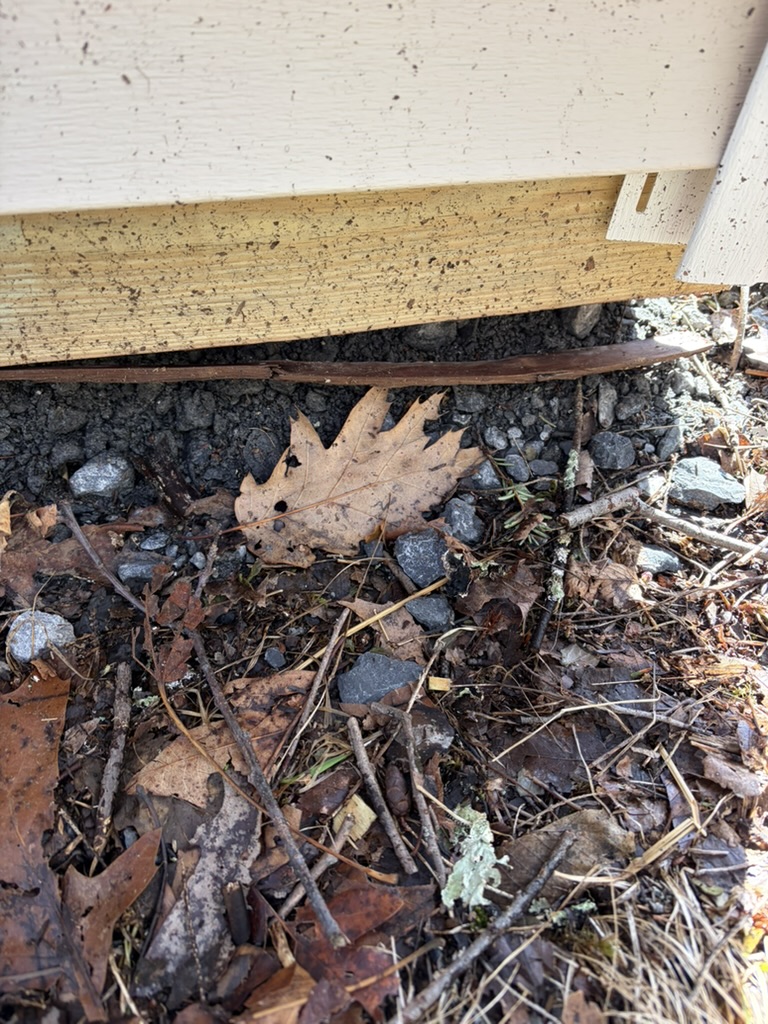
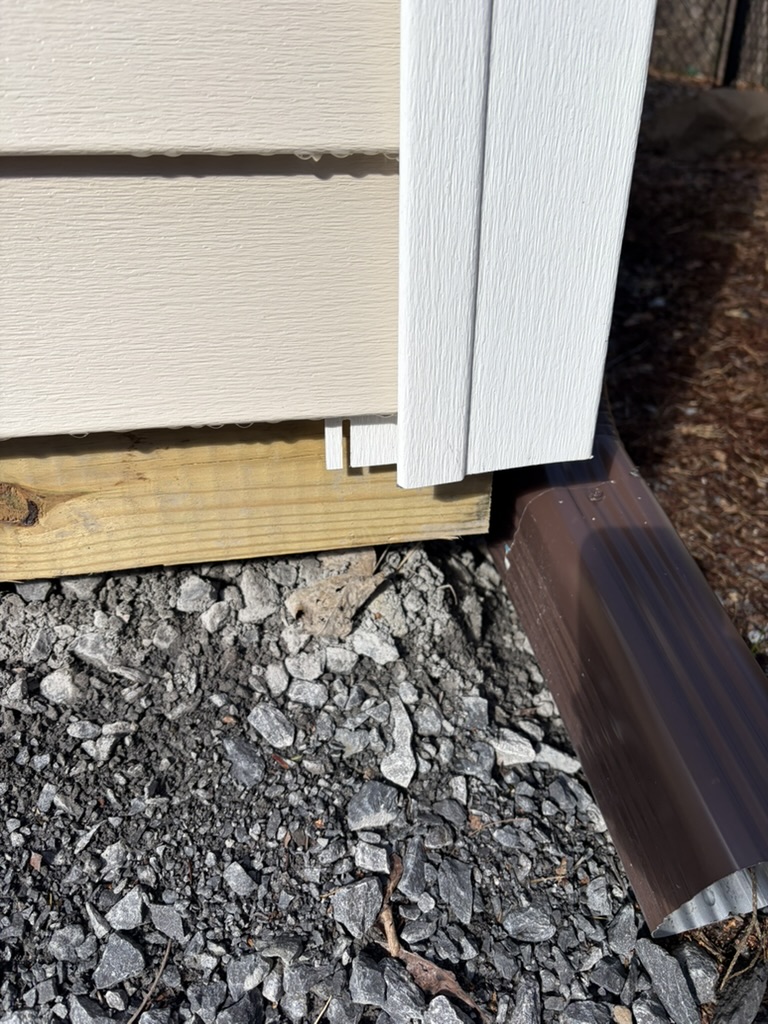
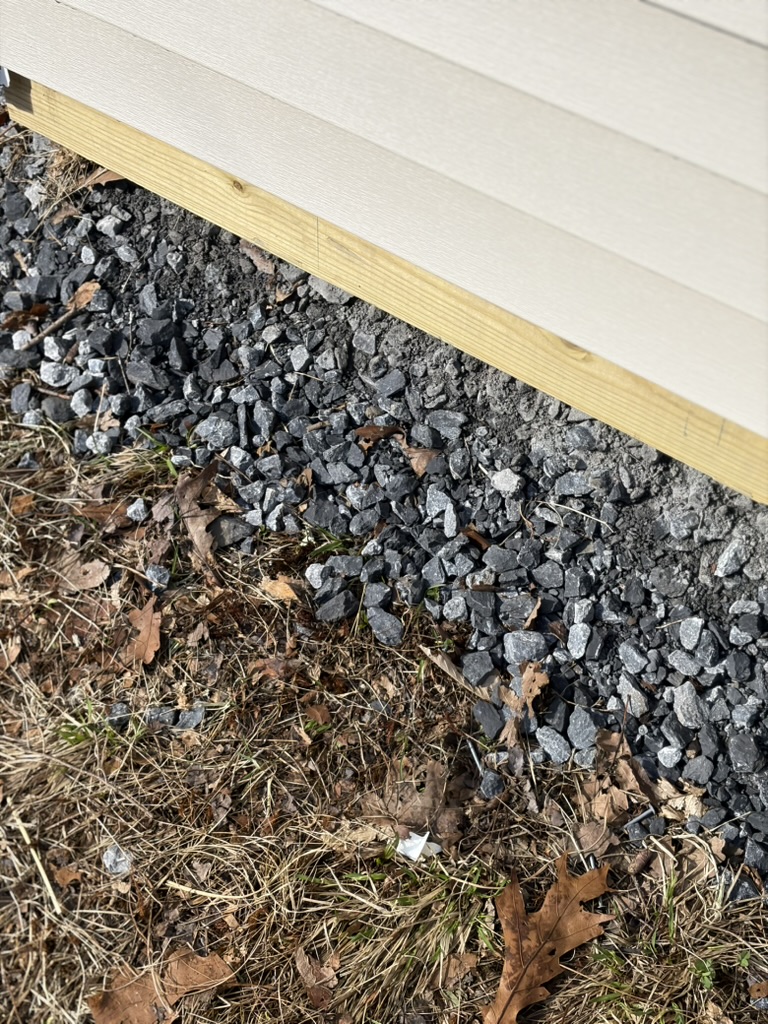
MODERATE Issue 1: Foundation — Inadequate Base Support
▼
Condition
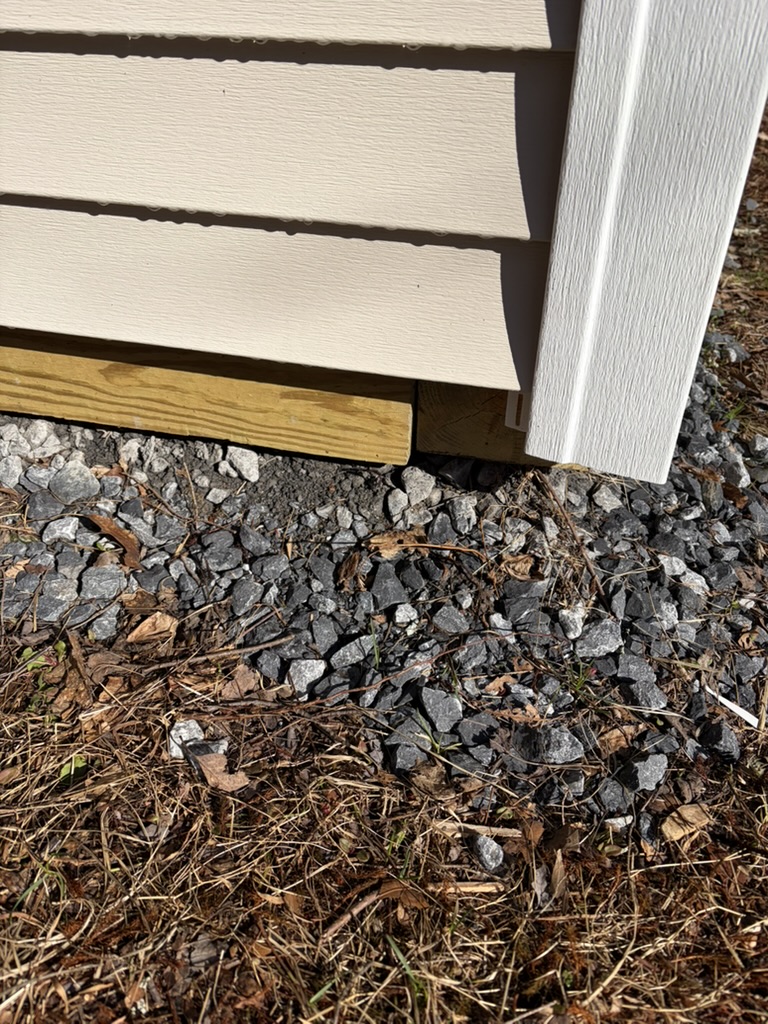
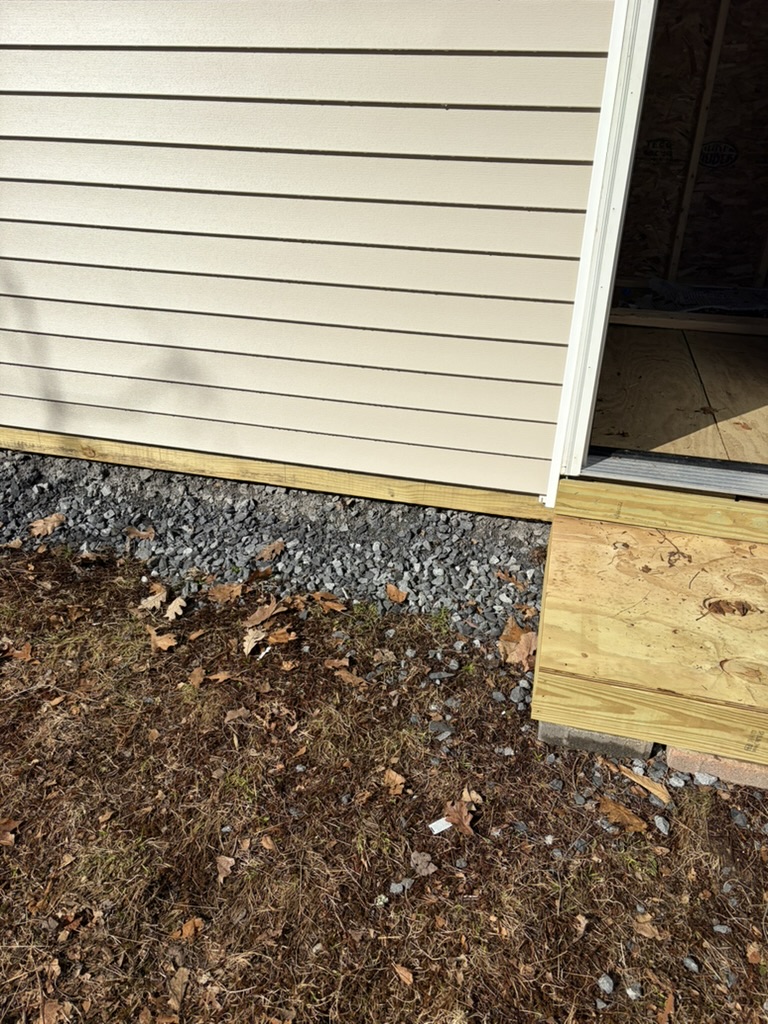
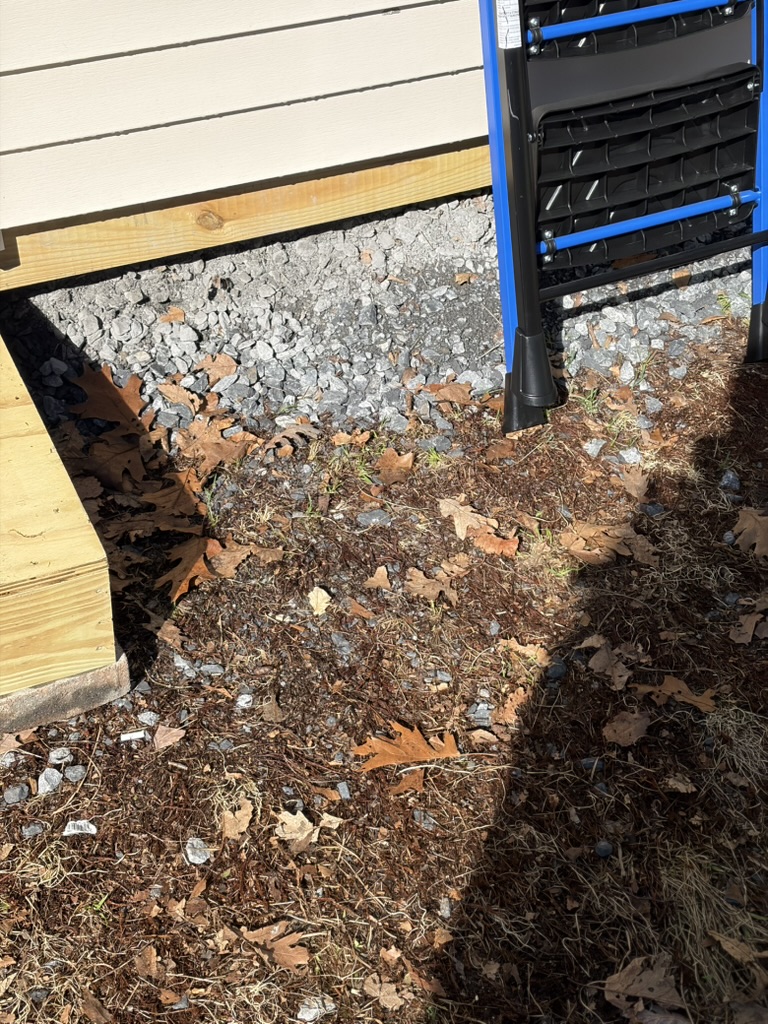
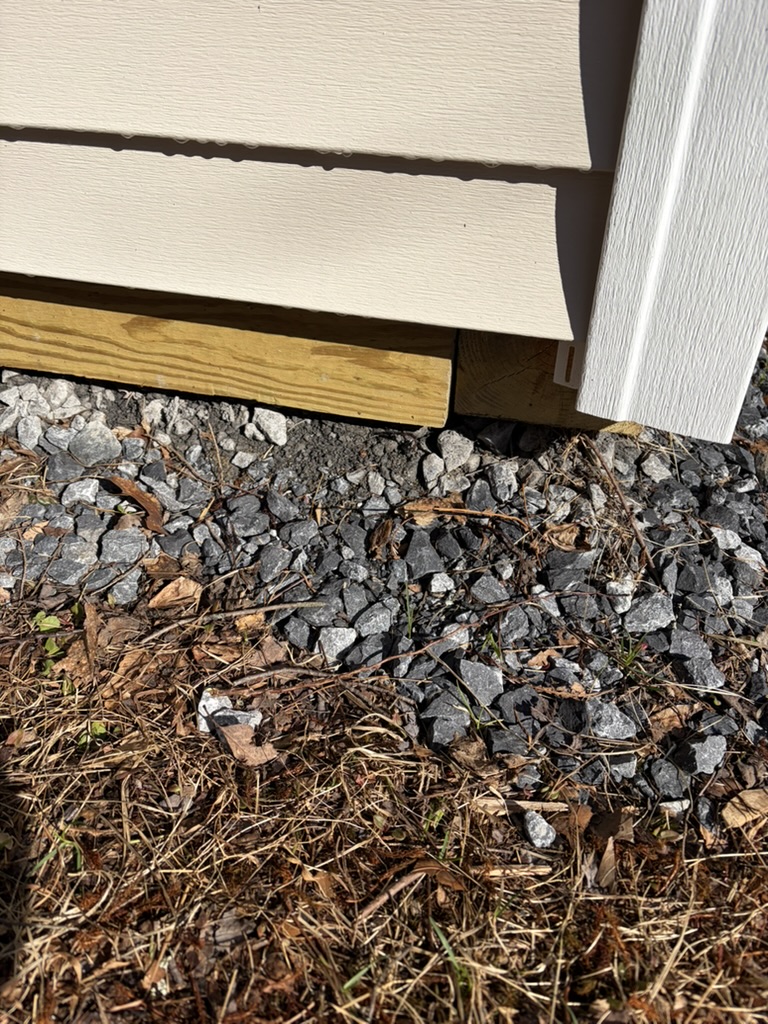
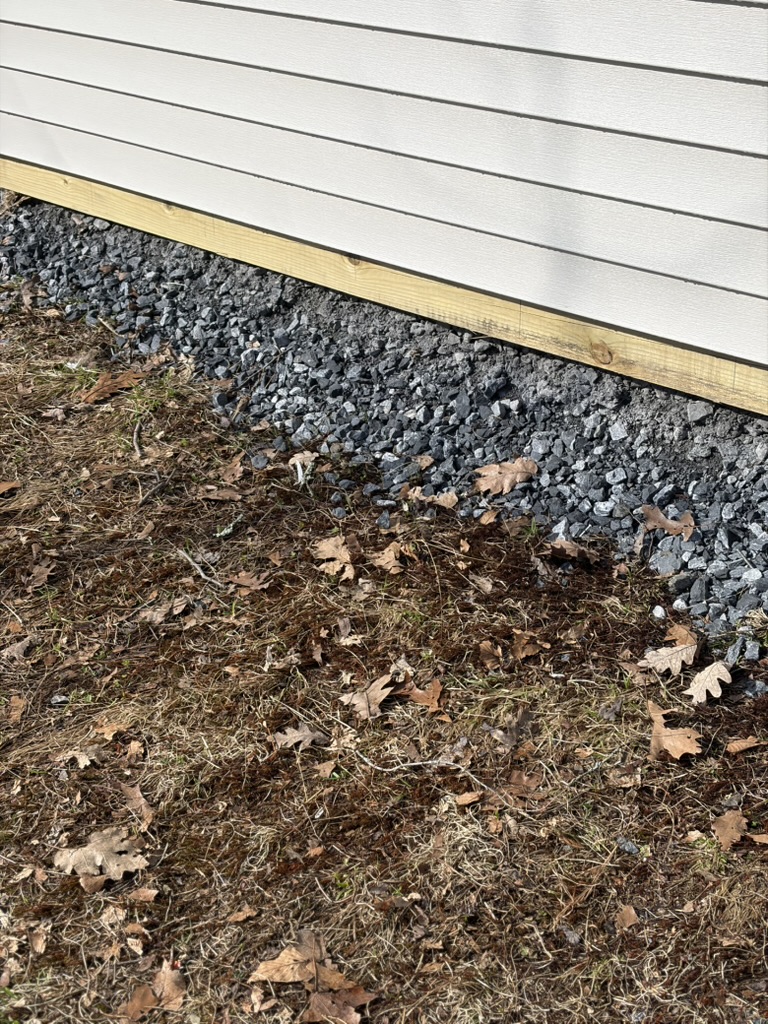
The shed rests on loose #4 crushed stone — a coarse, angular aggregate approximately 1.5 to 2.5 inches in diameter — with no concrete footings, piers, or defined pad system. While #4 stone provides good drainage, it is too large and too loose to compact into a stable bearing surface on its own. The stone base does not extend to or beyond the shed footprint in multiple locations. Several corners show the base framing projecting past the edge of the prepared stone. Corner framing joints show the perpendicular base member terminating into the side member rather than overlapping it.
Assessment
The combination of incomplete corner bearing and an irregular stone base creates a moderate structural-support deficiency at the perimeter. This can lead to differential settlement over time — doors stop working, floor panels separate further, and framing joints loosen.
Standard Practice
A properly prepared shed foundation uses 3/4-inch clean crushed stone (not #4), compacted in lifts to create a dense, stable bearing surface. The pad should be level and extend 12 inches or more beyond the shed footprint on all sides. Corner framing should overlap or connect continuously so the load path is uninterrupted.
Recommended Correction
Jack and re-level the structure. Extend the stone pad with properly sized 3/4" clean crushed stone, compacted in lifts, to provide full perimeter support. Add blocking and anchoring at corners. Evaluate whether skid bearing or other foundation improvements are needed based on conditions found during correction.
HIGH Issue 2: Roof Framing — Ridge Splice & Rafter Connections
▼
Condition
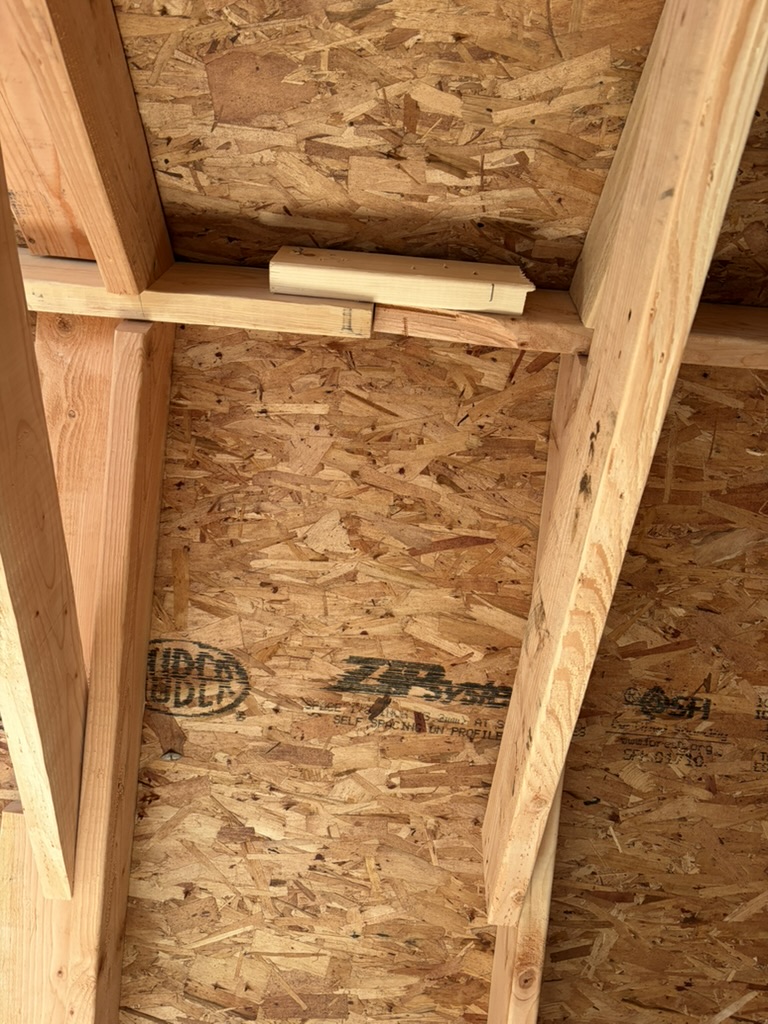
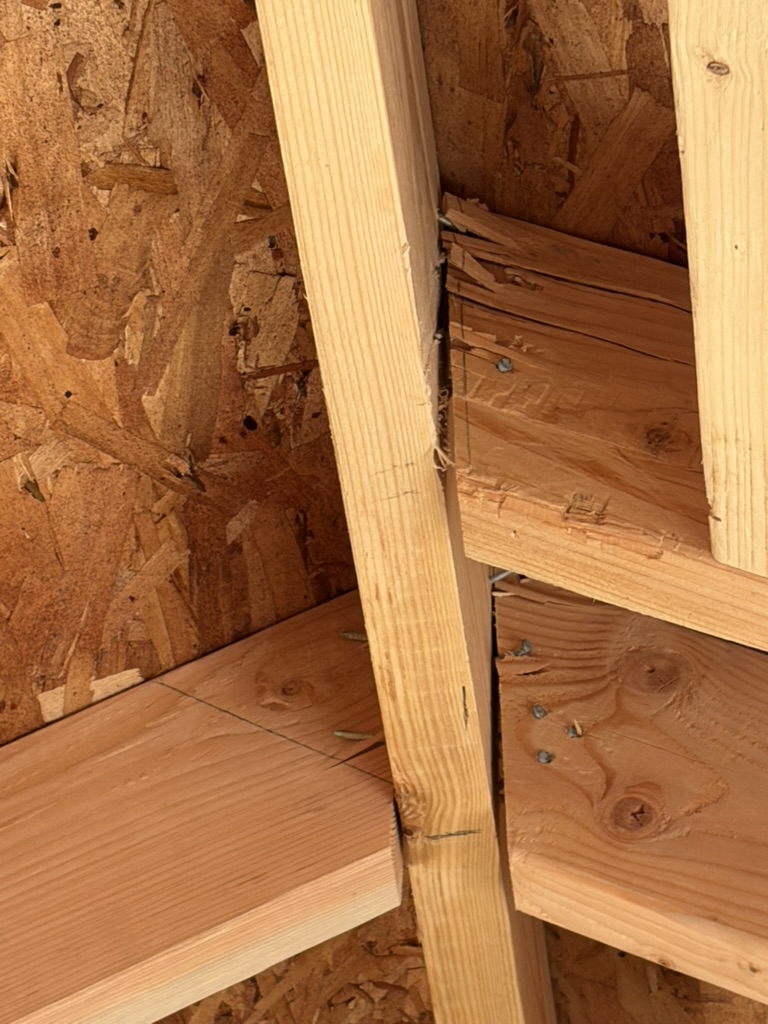
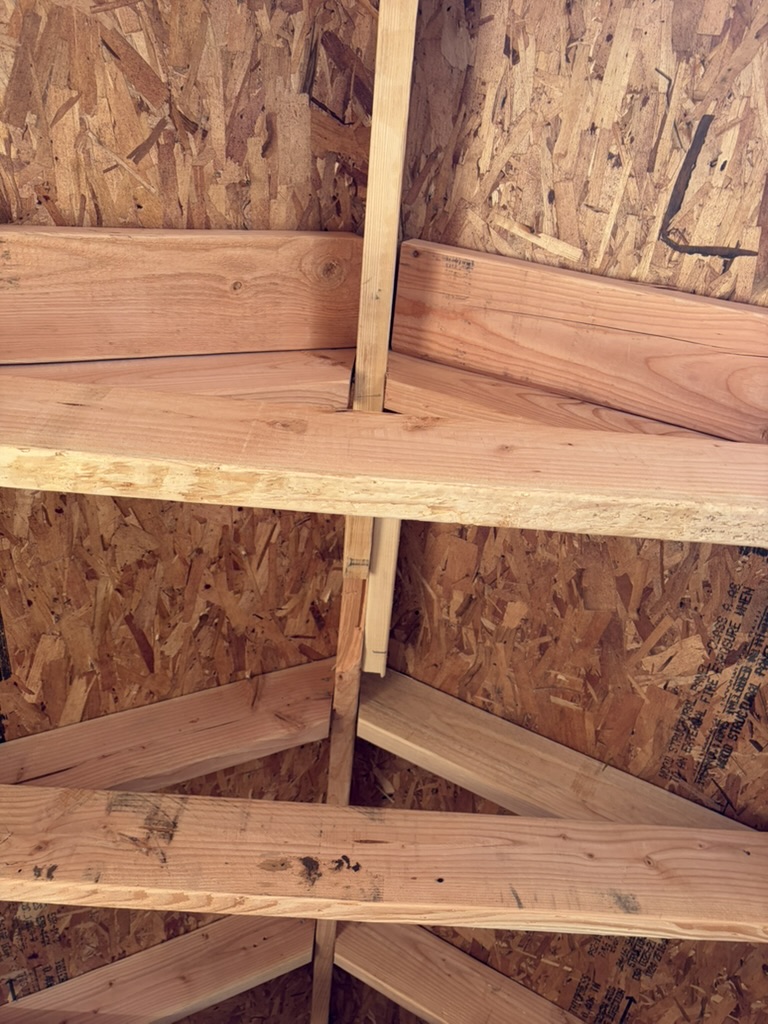
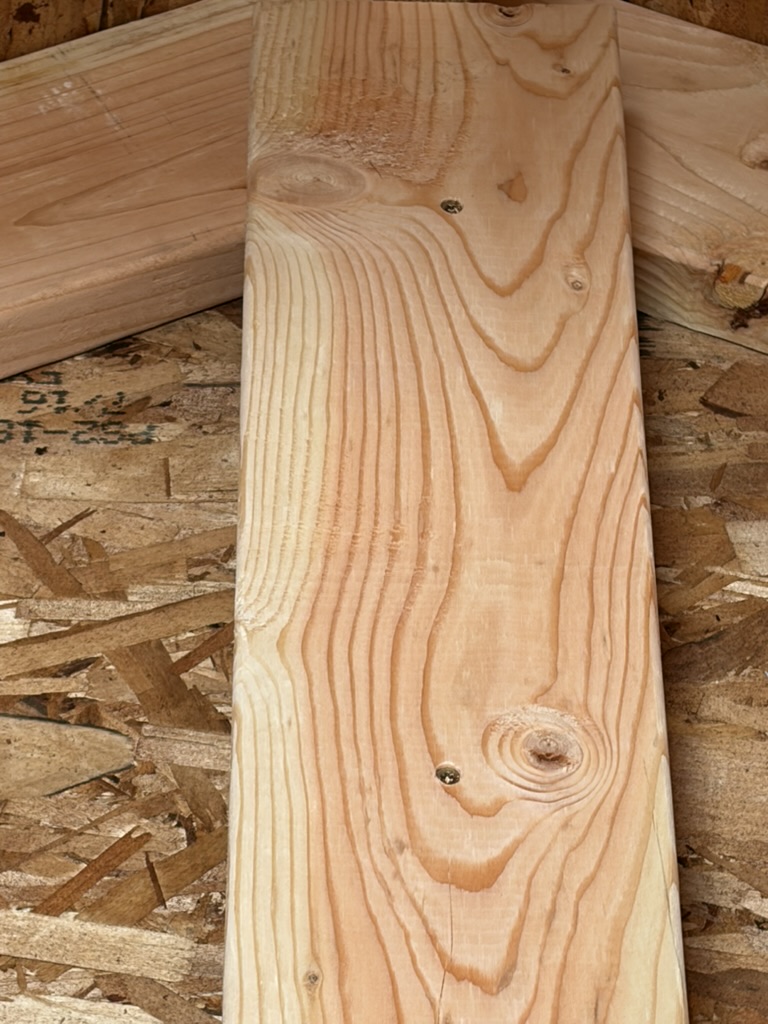
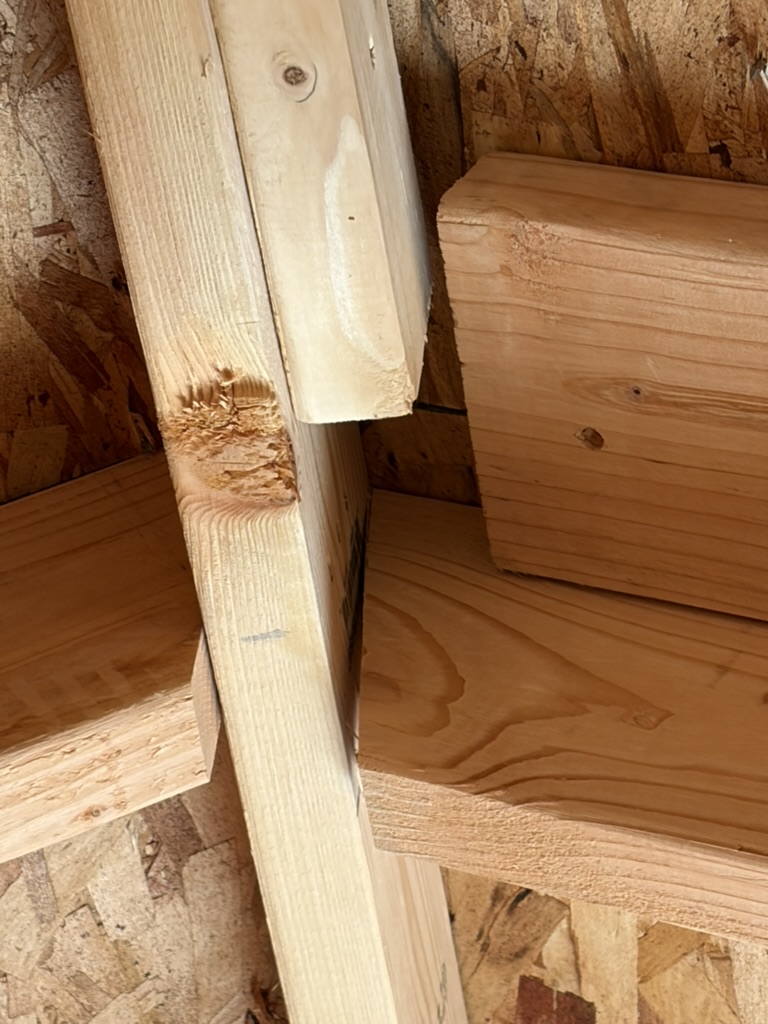
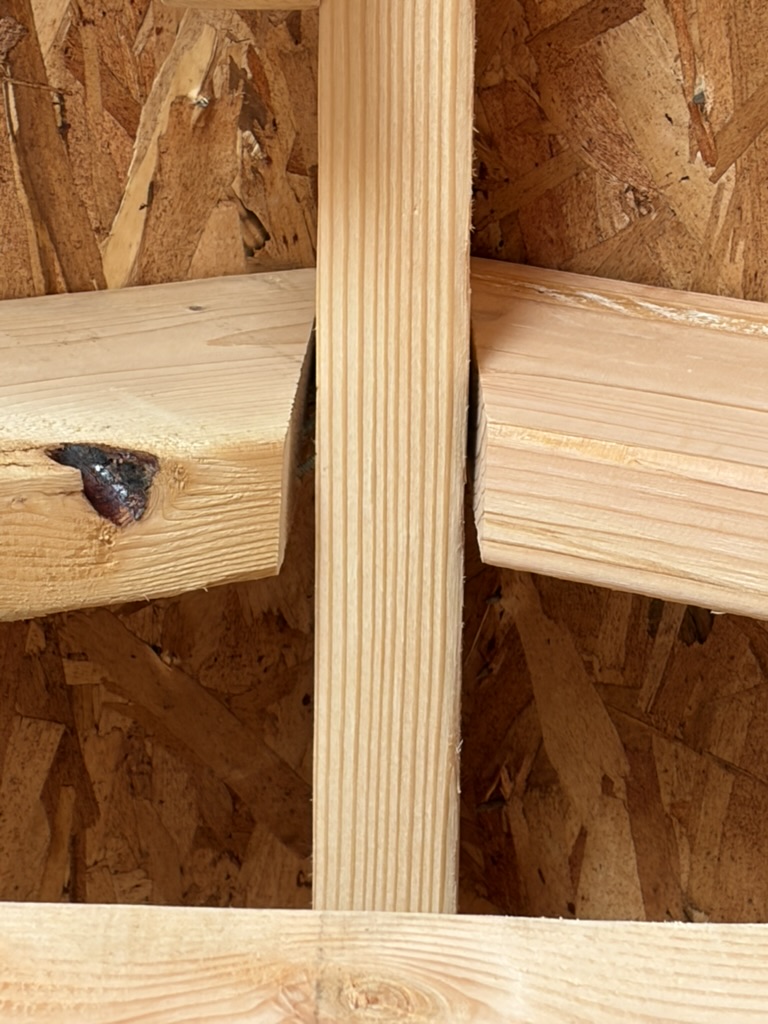
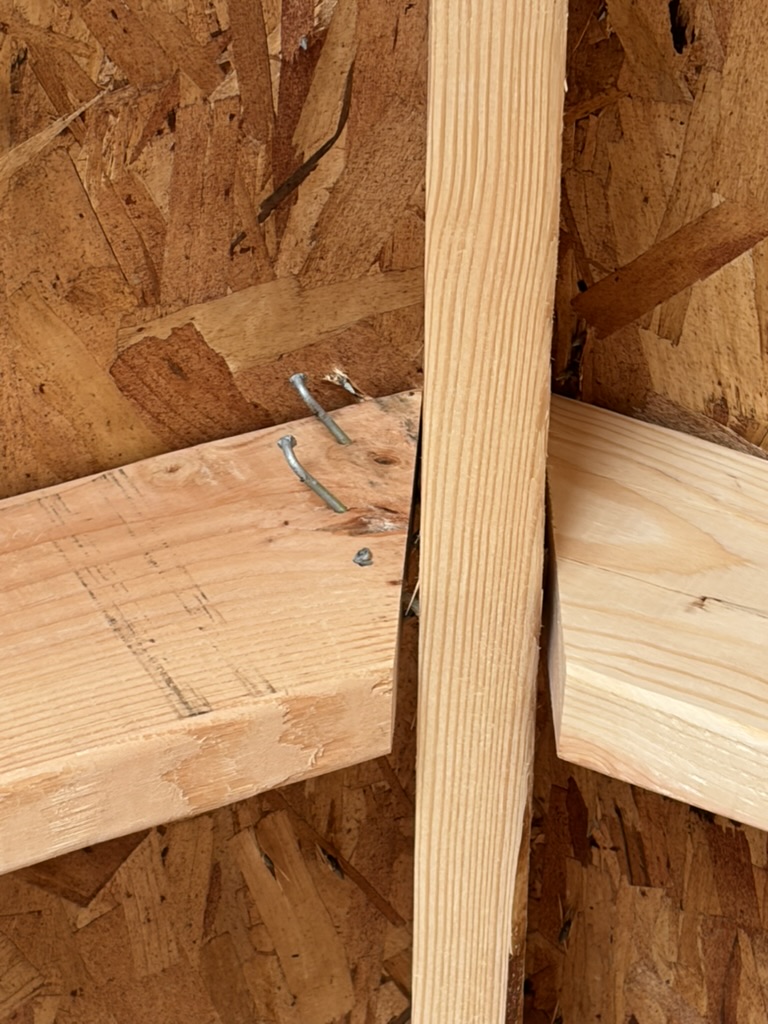
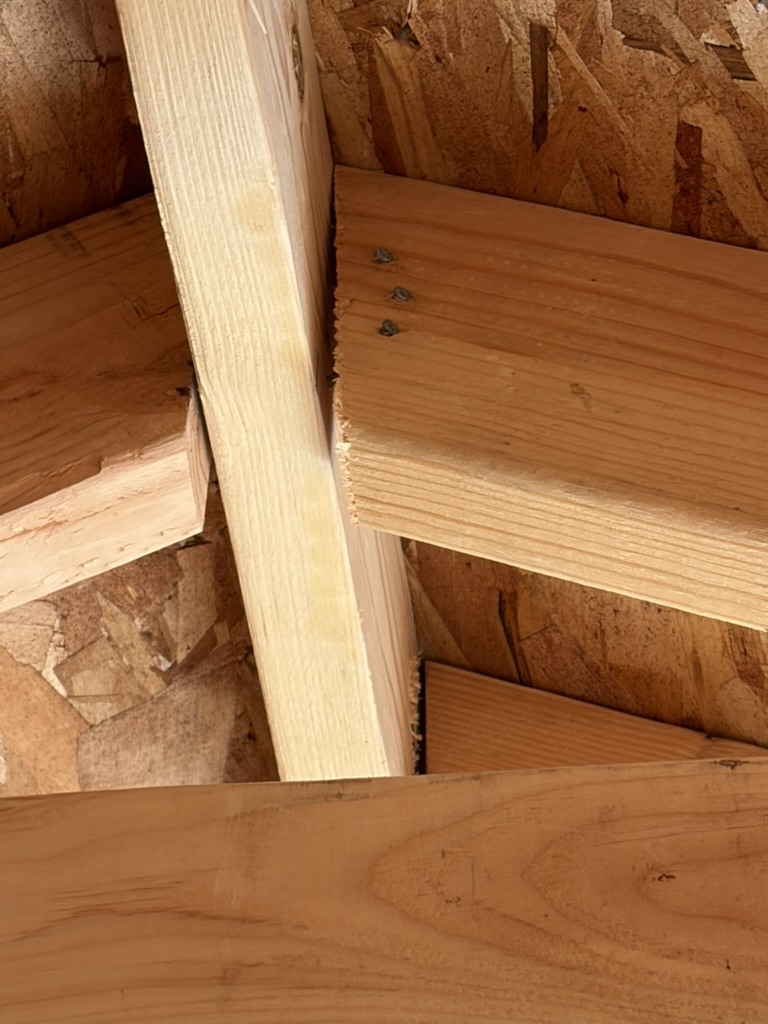
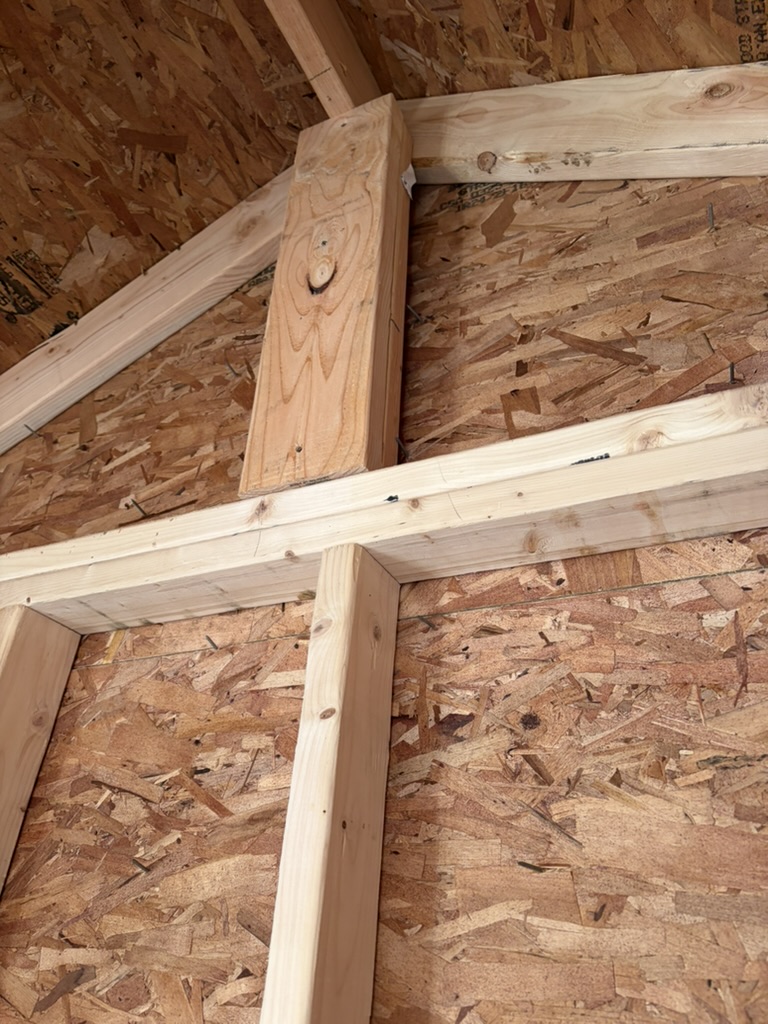
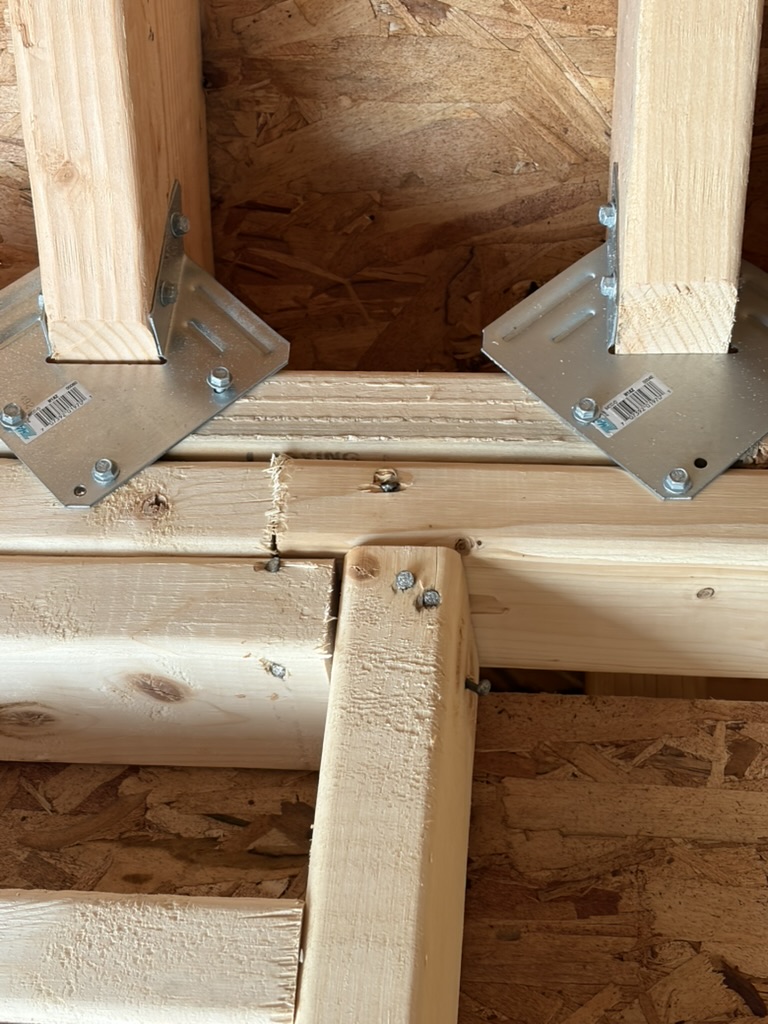
Based on the visible framing, the roof appears to be framed around a ridge board rather than a structural ridge beam. The ridge board is spliced mid-span using a short 2x4 scab block rather than a properly engineered splice or continuous member. One ridge piece appears split or crushed at the splice. Throughout the roof, opposing rafters do not bear evenly against the ridge — gaps, rough cuts, and irregular fastening are visible at multiple connection points. No lower rafter ties were visible in the available photographs. At least one high collar tie or cross-brace was observed near the ridge at the far end, but this does not serve the same function as rafter ties. At the gable ends, improvised gusset plates replace clean, continuous connections.
Assessment
This is one of the strongest structural workmanship concerns documented in the inspection. Because ridge-board roof systems typically rely on opposing rafters and adequate lateral restraint (rafter ties in the lower third of the roof triangle), the absence of visible rafter ties combined with a poorly spliced ridge board creates a framing configuration that should be evaluated further for proper load path and resistance to wall spread.
Standard Practice
A continuous, properly sized ridge board with opposing rafters cut to consistent angles, seated tight, and fastened with a proper nailing schedule or approved metal connectors. Rafter ties should be installed in the lower third of the rafter span to resist wall spread, or a structural ridge beam with adequate end bearing must be provided.
Recommended Correction
Remove the damaged ridge splice, sister or replace the affected ridge section with sound lumber, recut and reset poorly bearing rafters, and reinforce connections with proper framing hardware.
HIGH Issue 3: Wall-to-Roof Enclosure Gap
▼
Condition
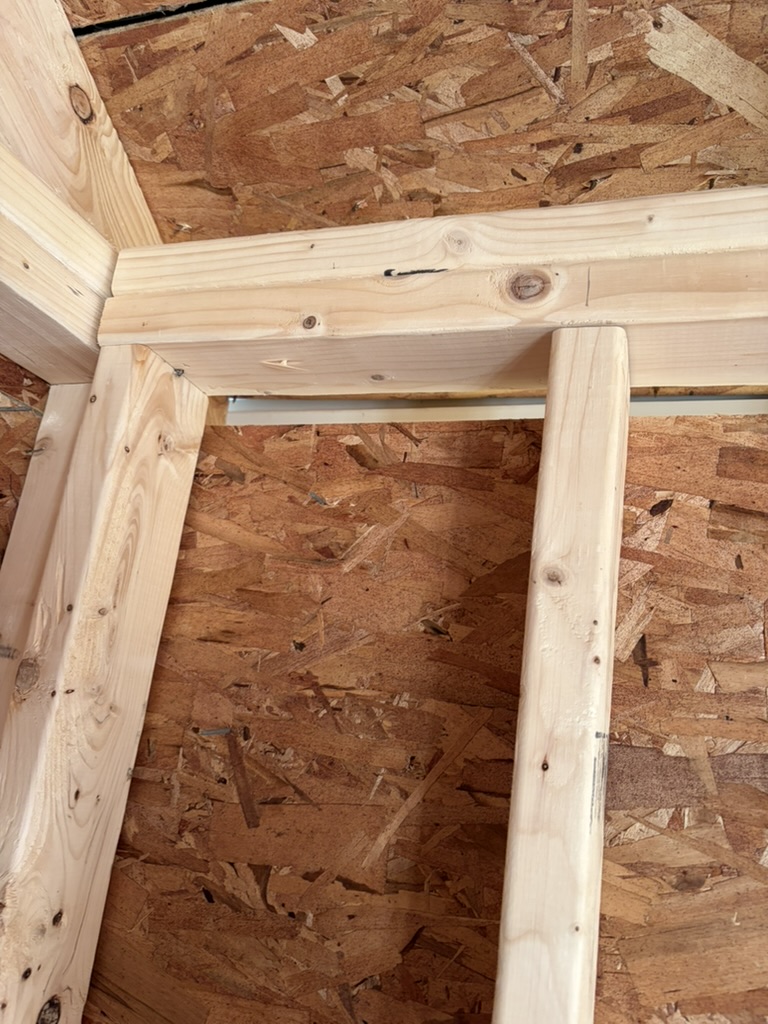
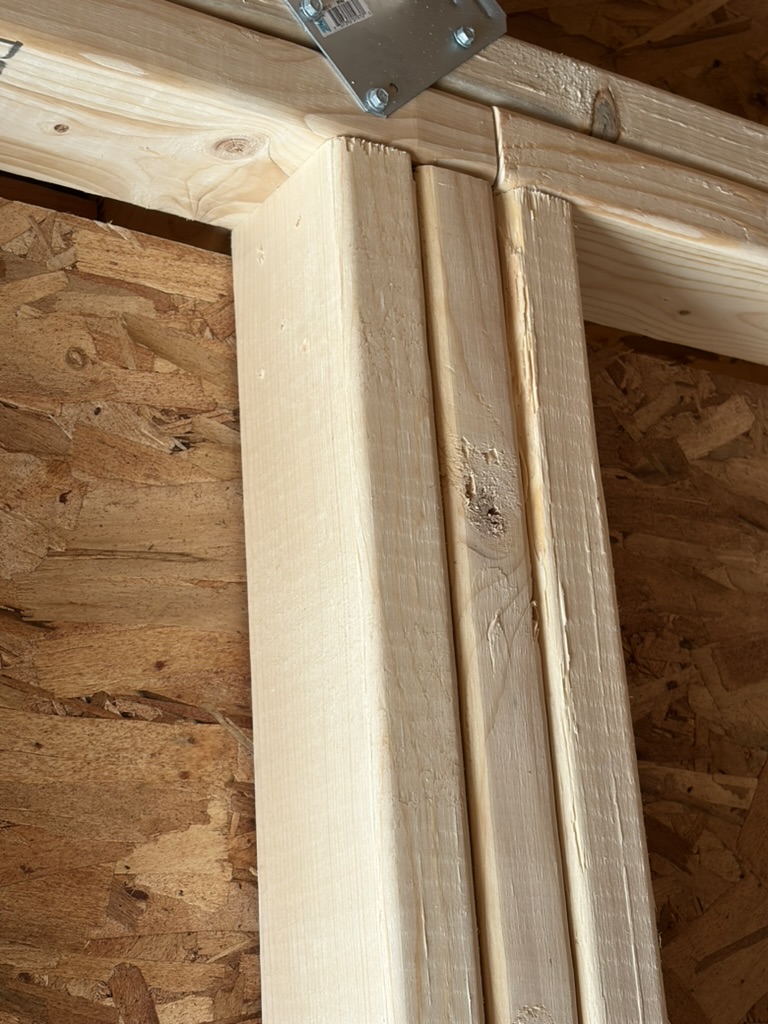
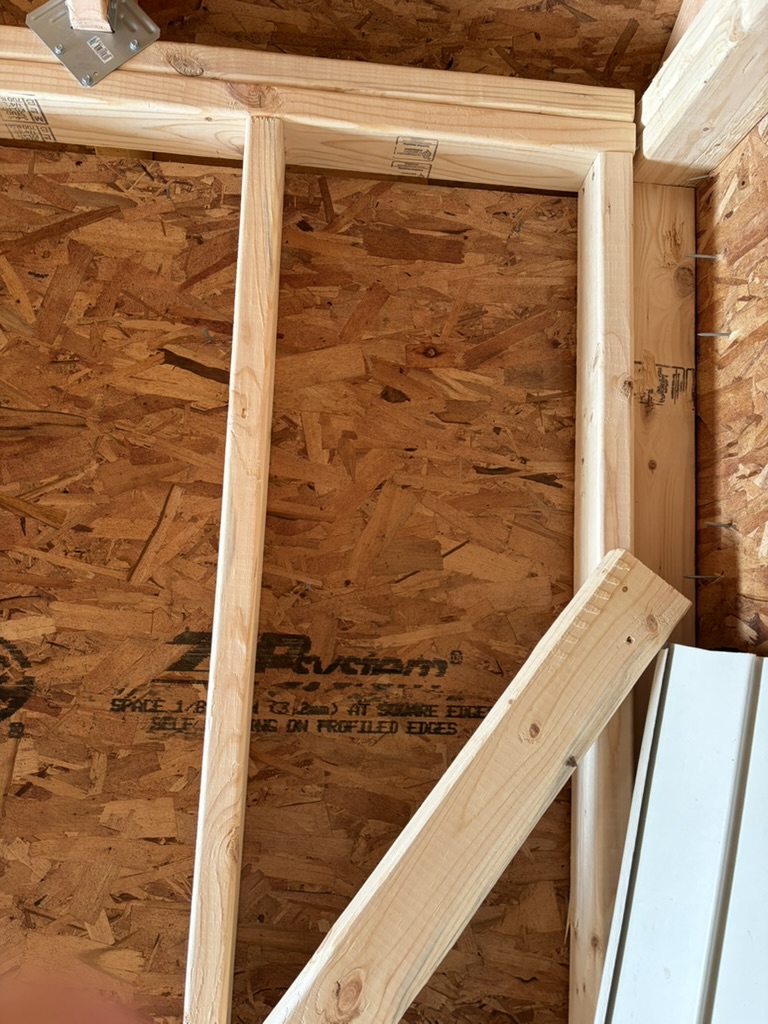
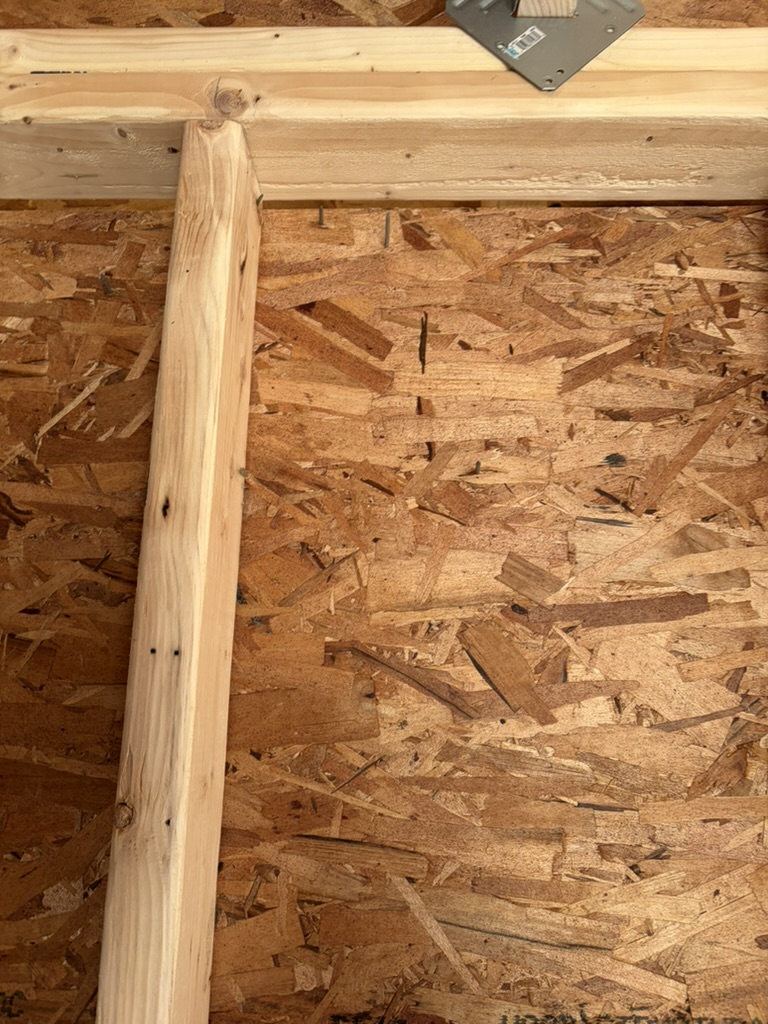
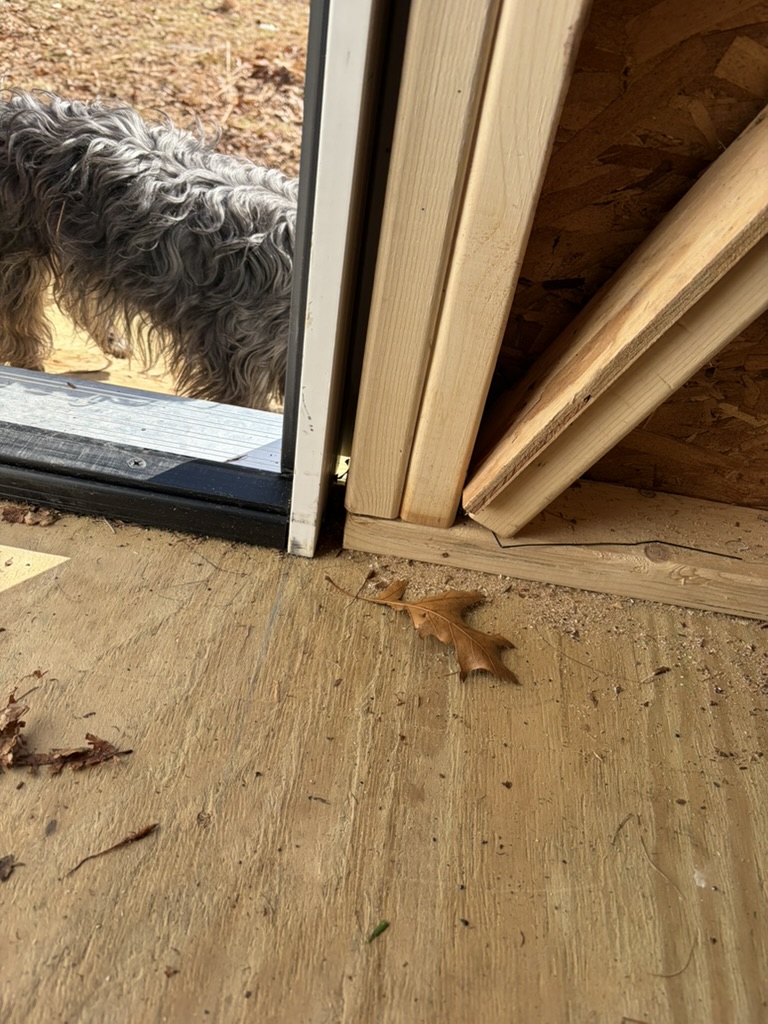
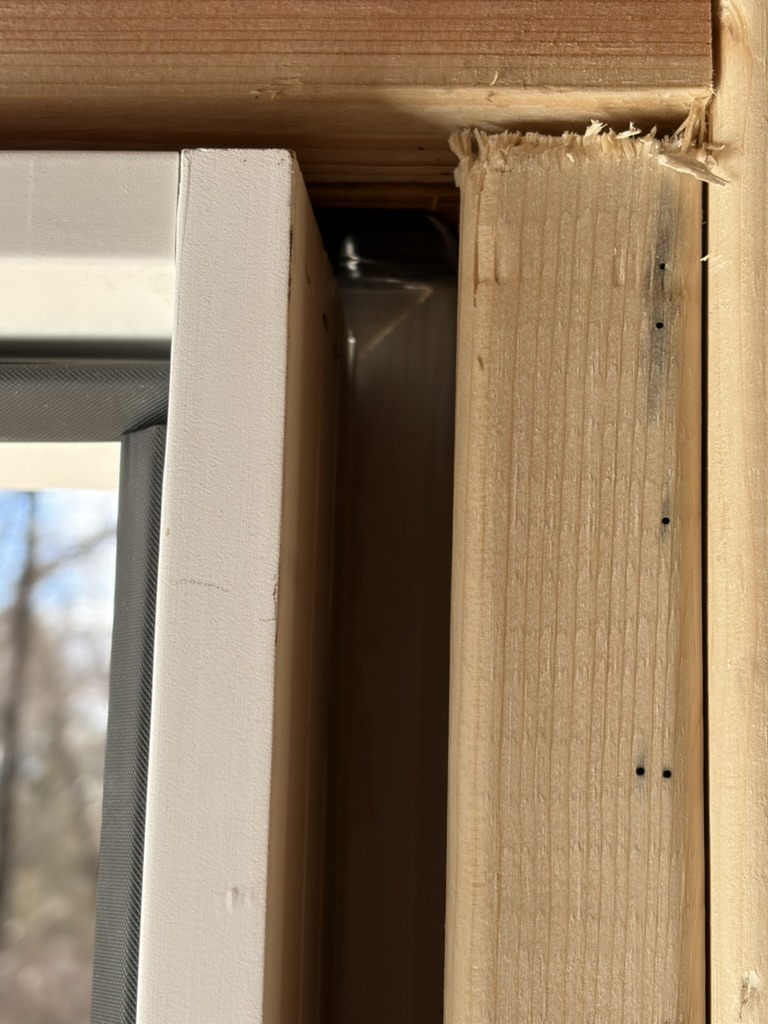
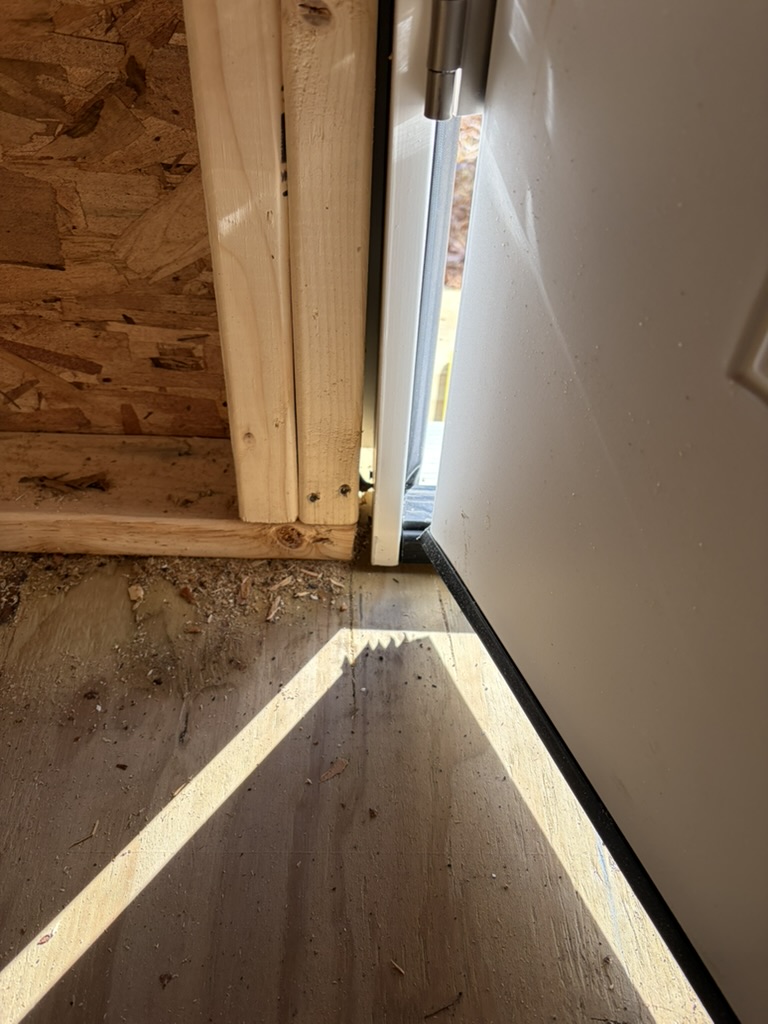
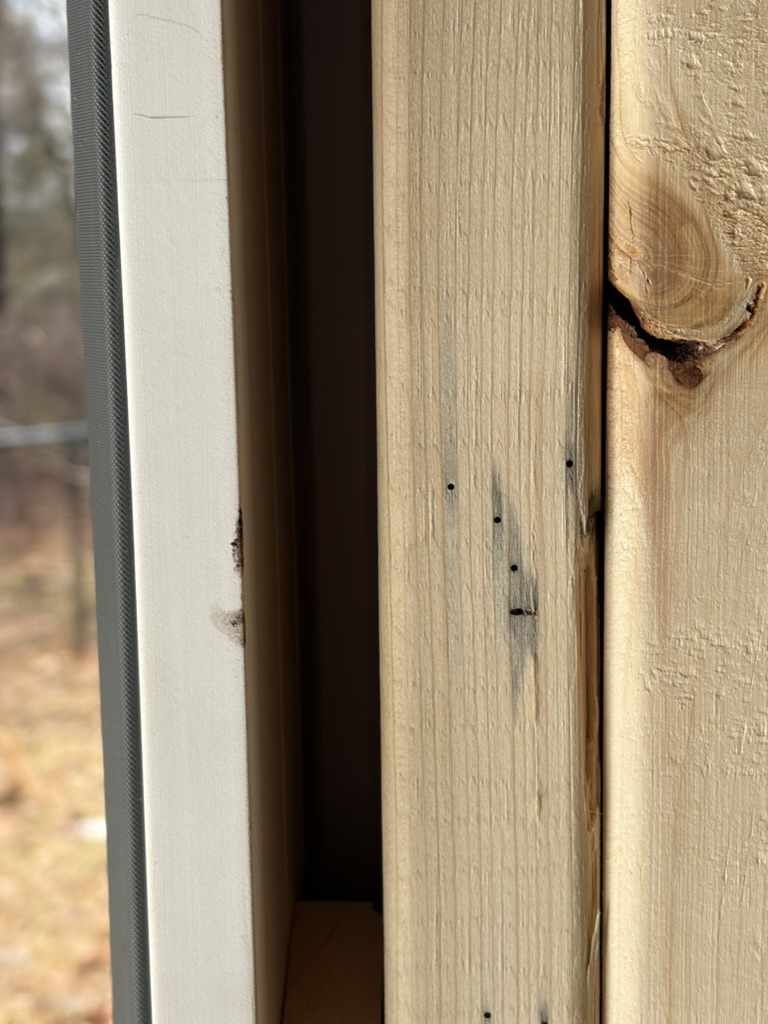
A continuous open gap of approximately 1–2 inches exists along the interior wall-to-roof junction. The wall sheathing stops short of the top plate. Daylight and the exterior light fixture are visible through the gap from the interior. The gap appears continuous across substantial portions of at least two wall runs.
Assessment
The building envelope is incomplete. This creates a direct pathway for wind-driven rain, insects, rodents, dust, and uncontrolled air movement. For a shed intended to store valuable personal property, this is a significant construction deficiency.
Recommended Correction
Install blocking and sheathing infill to close the gap on all affected walls. Verify exterior siding and WRB are continuous at the junction. Seal the entire wall-to-roof transition.
HIGH Issue 4: Door Assembly — Framing, Alignment, Sealing, Hardware
▼
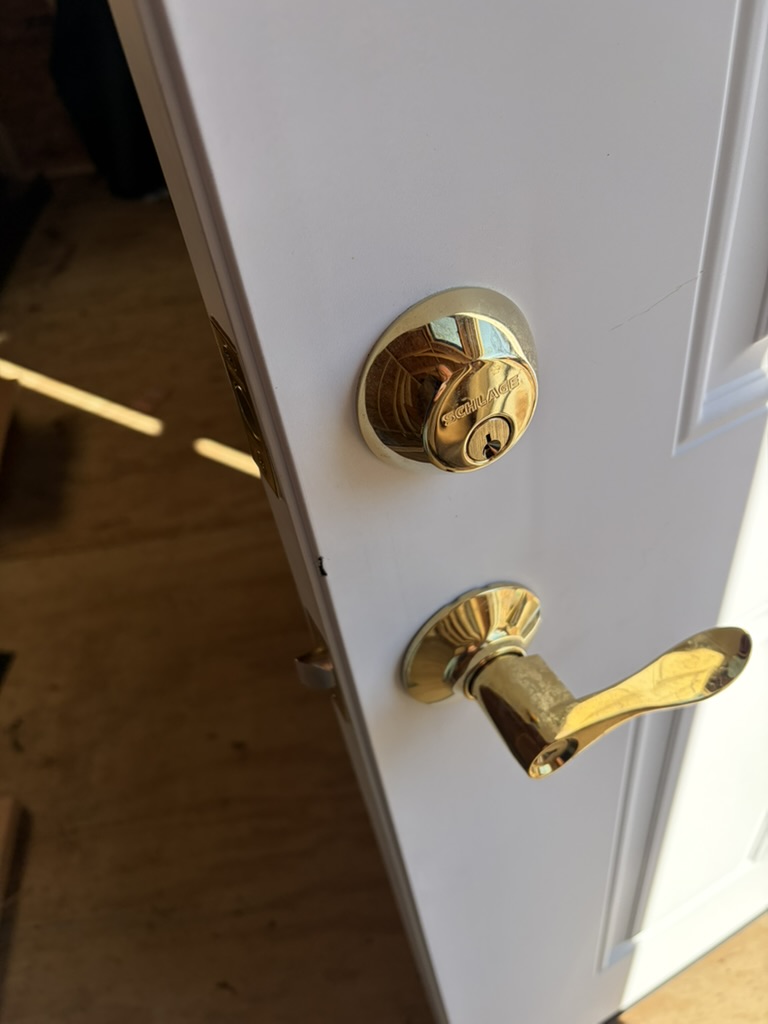
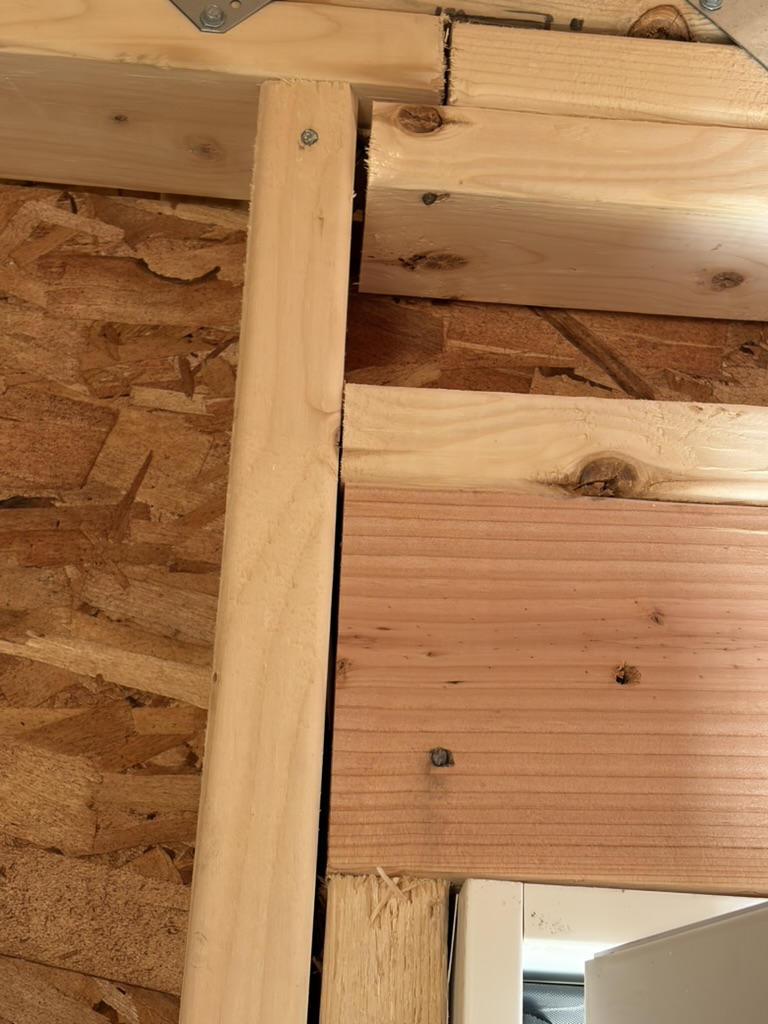
Condition
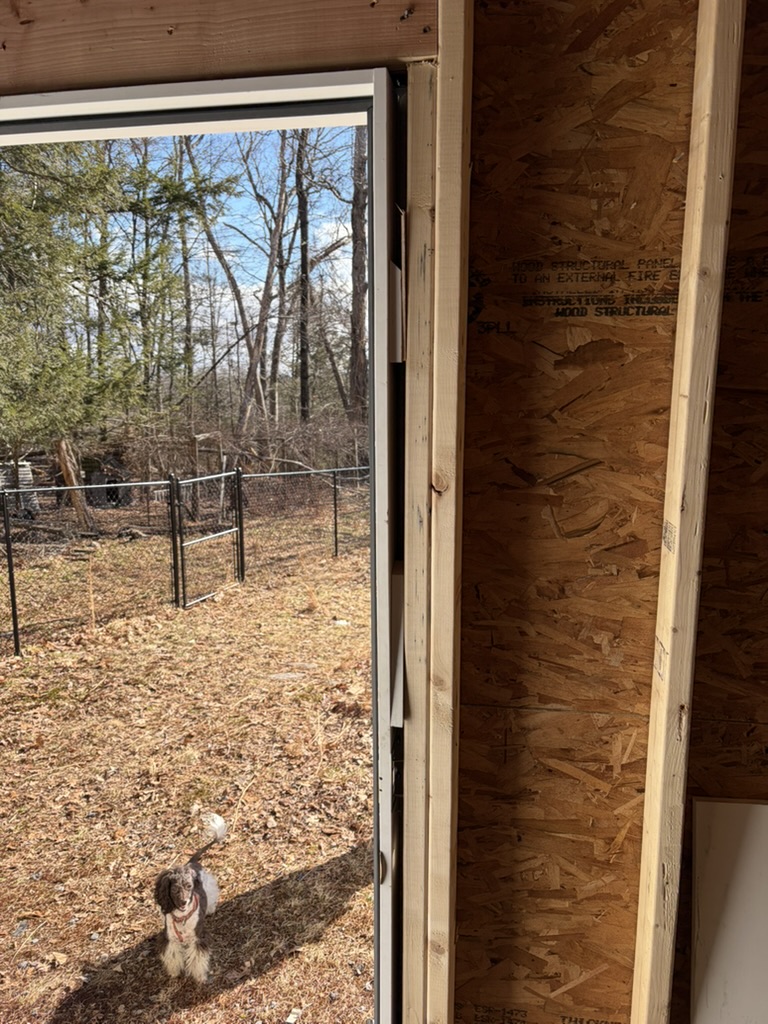
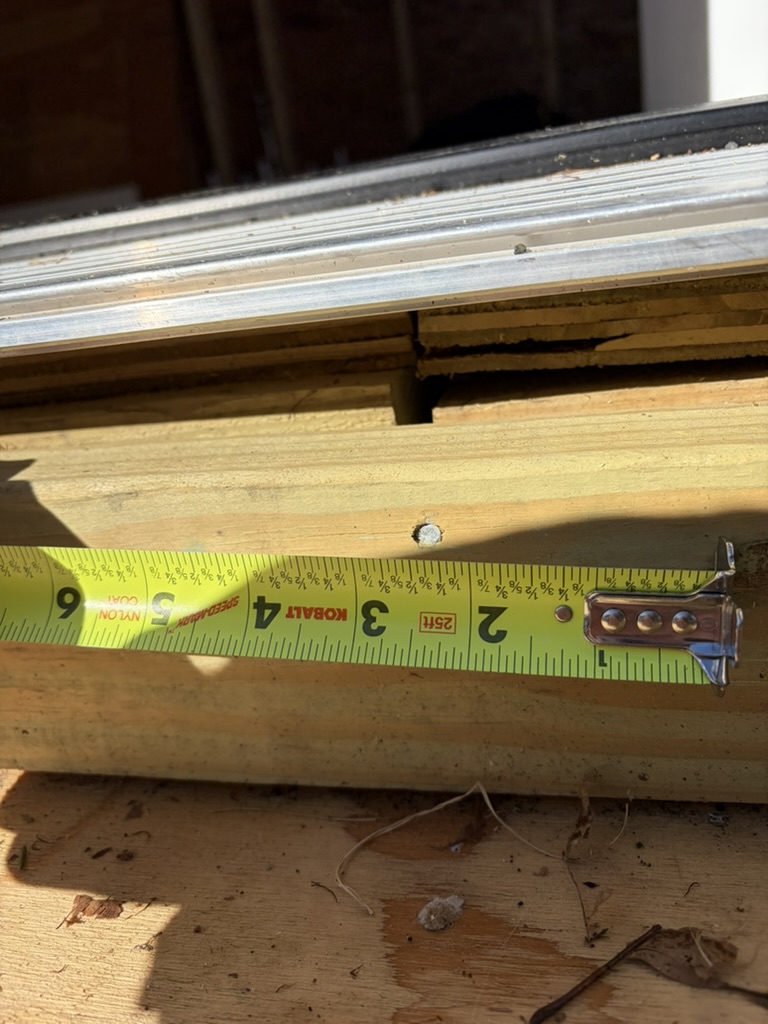
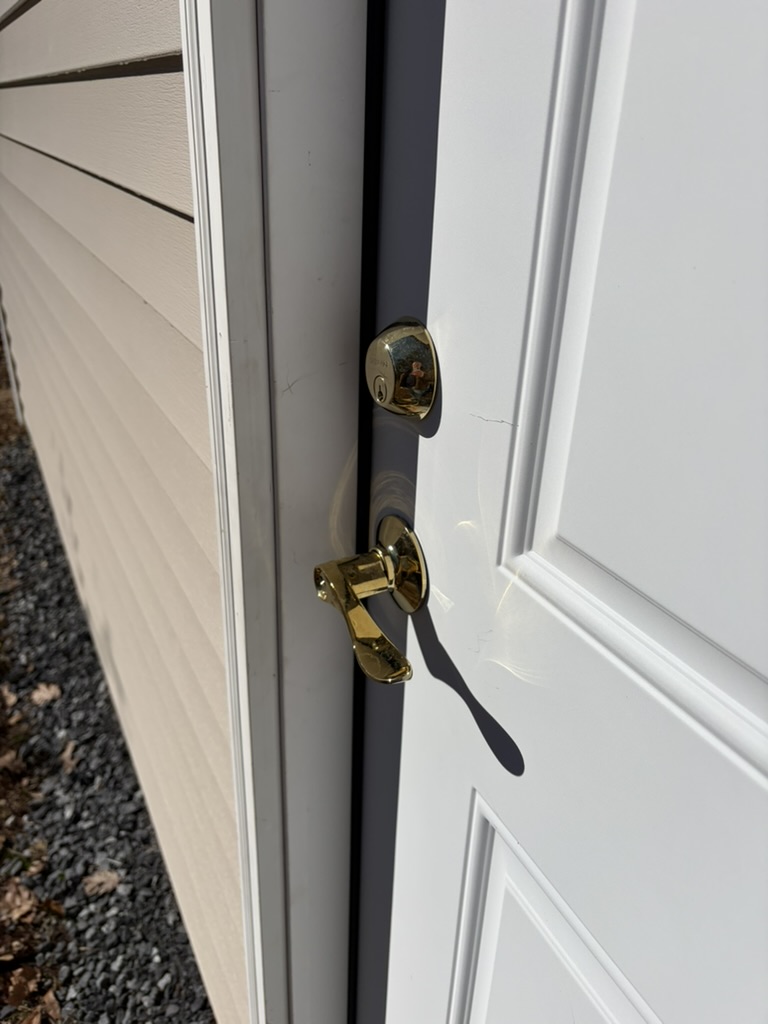
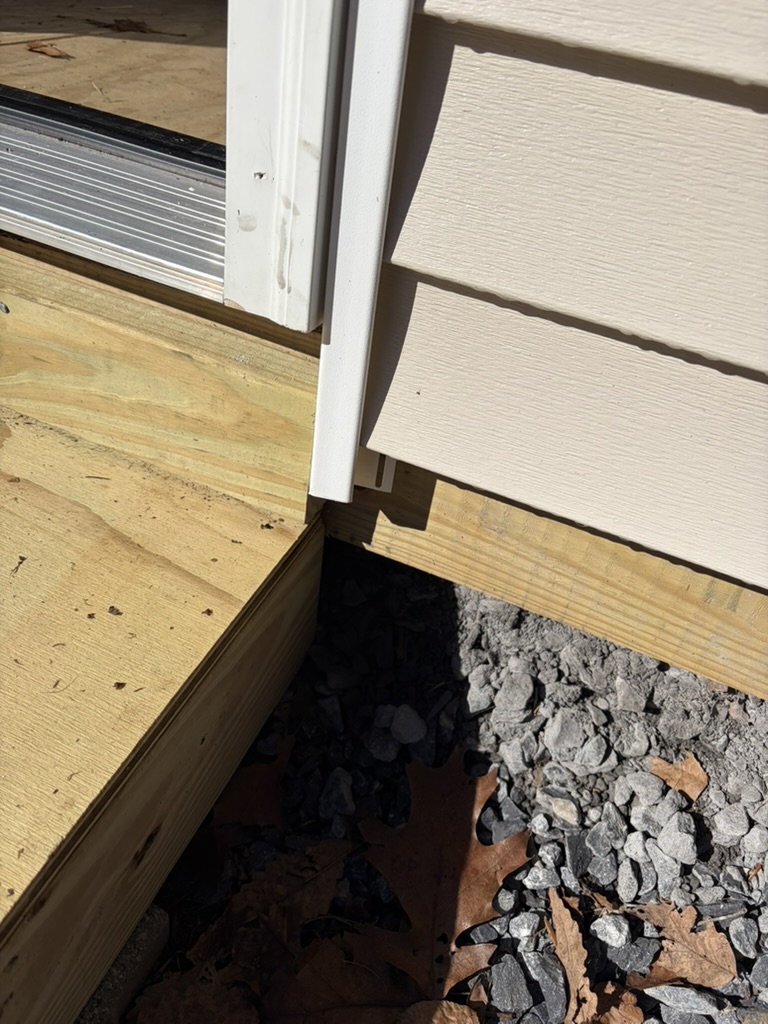
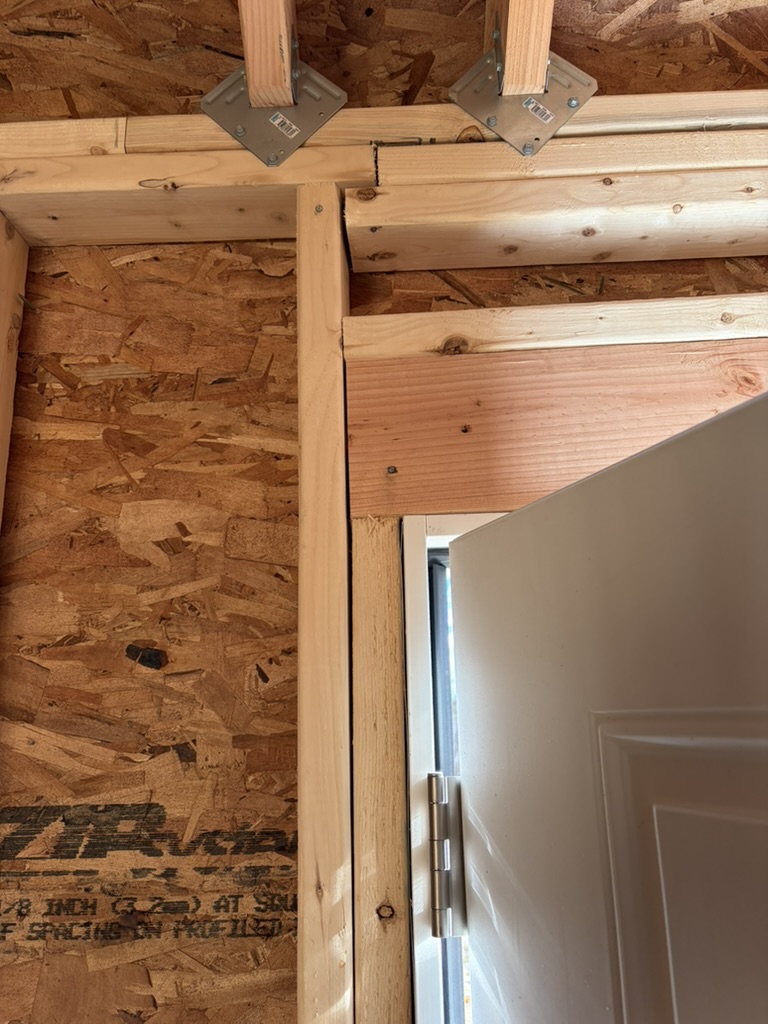
The entry door has multiple compounding deficiencies. The rough opening is oversized and poorly framed with visible gaps. The header is pieced together with short members. The threshold has a visible void beneath it. The deadbolt does not align without repositioning the door. The installed lockset does not match the owner's specification.
Assessment
The door is the primary access point and one of the most vulnerable parts of the building envelope. A door that does not seal, does not lock correctly, and has incomplete framing is not a completed installation.
Recommended Correction
Reframe the rough opening, re-hang and re-shim the door, install solid backing under the threshold, seal the full perimeter, replace hardware with owner's specified lockset.
MODERATE Issue 5: Roof Sheathing Gaps
▼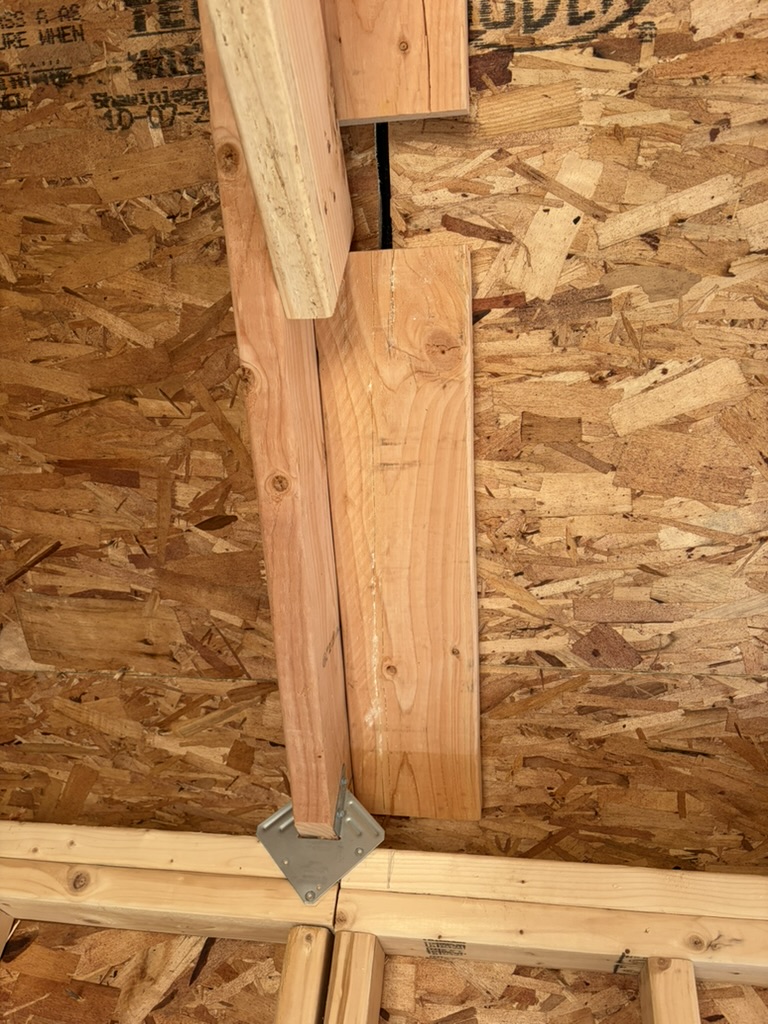
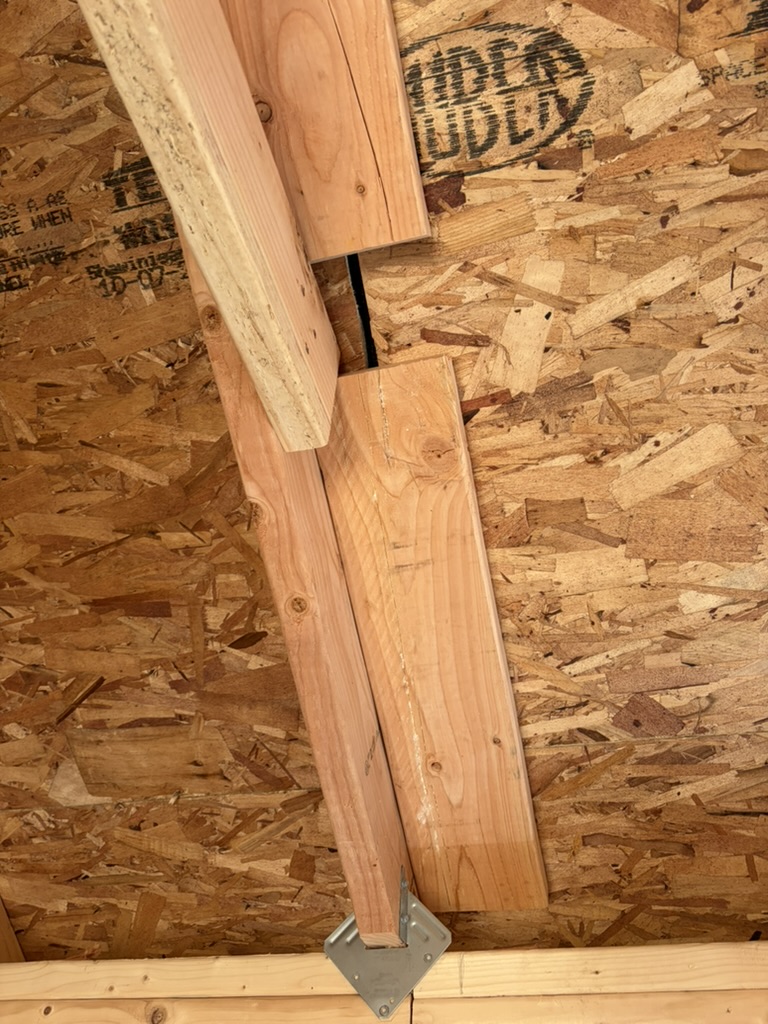
Condition
Open gaps of 1/4" to 1/2" exist between roof sheathing panels, large enough that roofing underlayment is visible. Improvised wood strips have been placed over some gaps — a field patch, not a proper installation.
Assessment
These gaps indicate poor sheathing fit. The improvised patches confirm the condition was known during construction and addressed with a shortcut rather than a proper correction.
Recommended Correction
Remove patch strips, reinstall or replace affected panels so edges land on framing. Perform concurrently with Issue 2 roof work.
MODERATE Issue 6: Subfloor Panel Gaps
▼
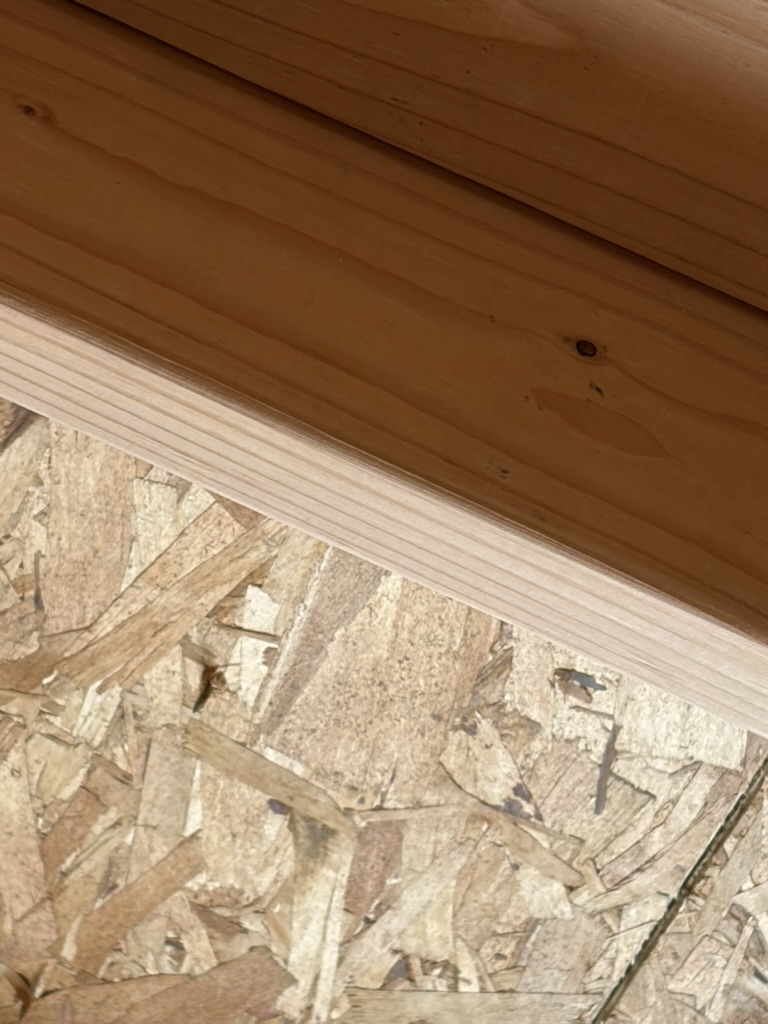
Condition
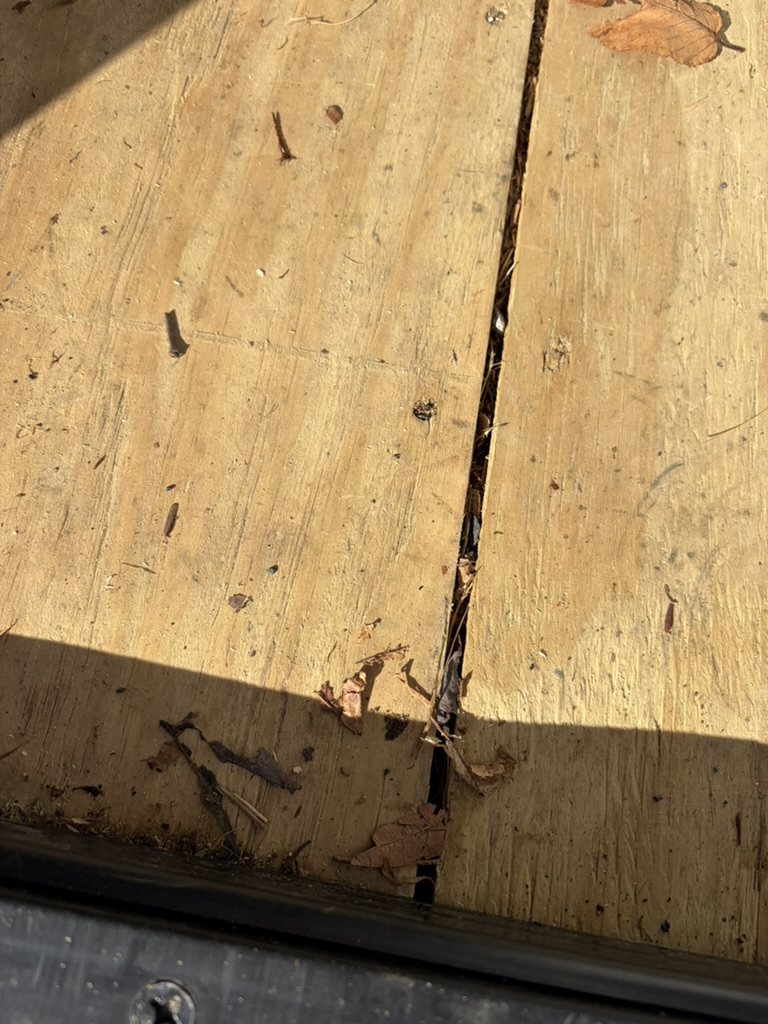
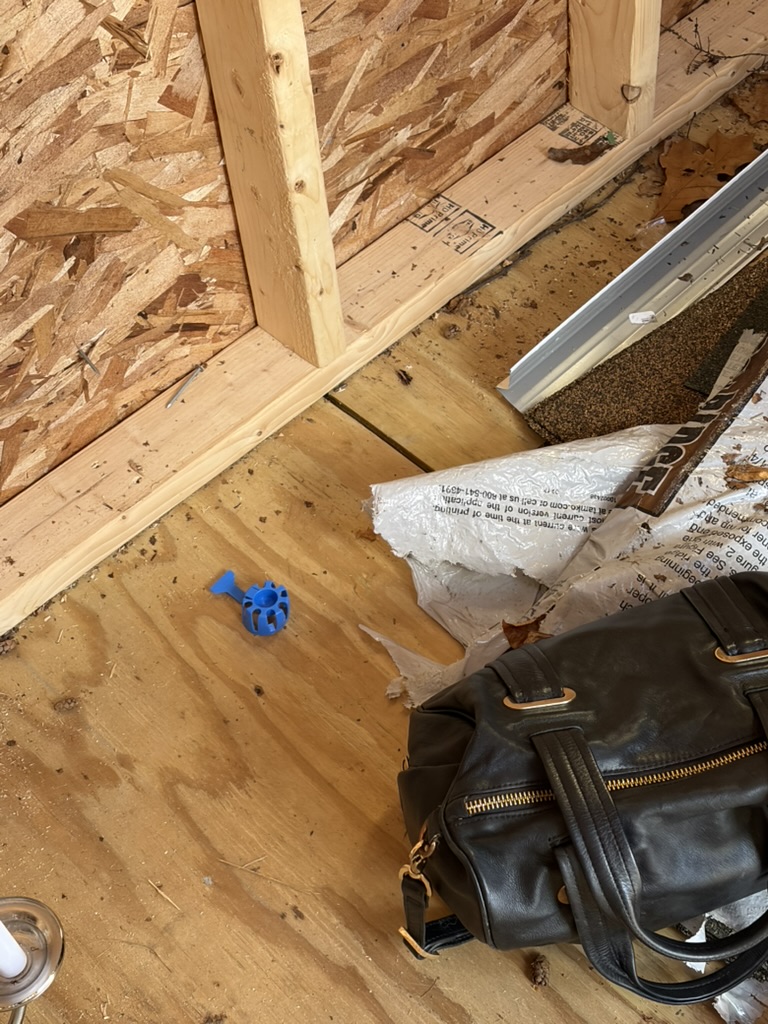
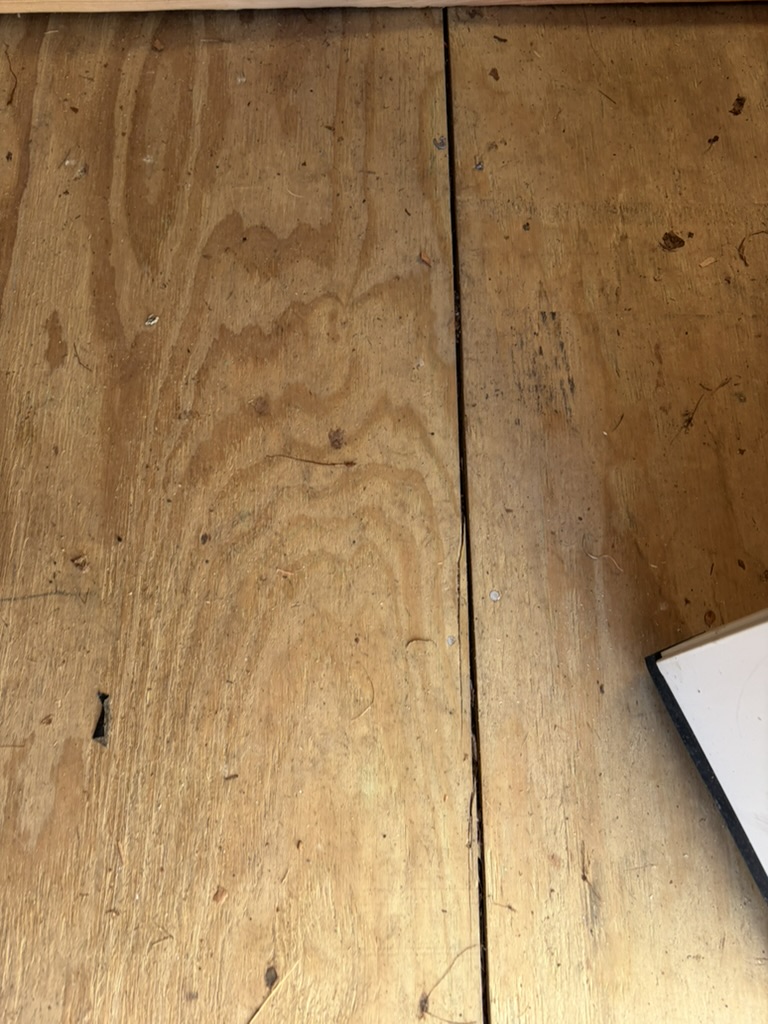
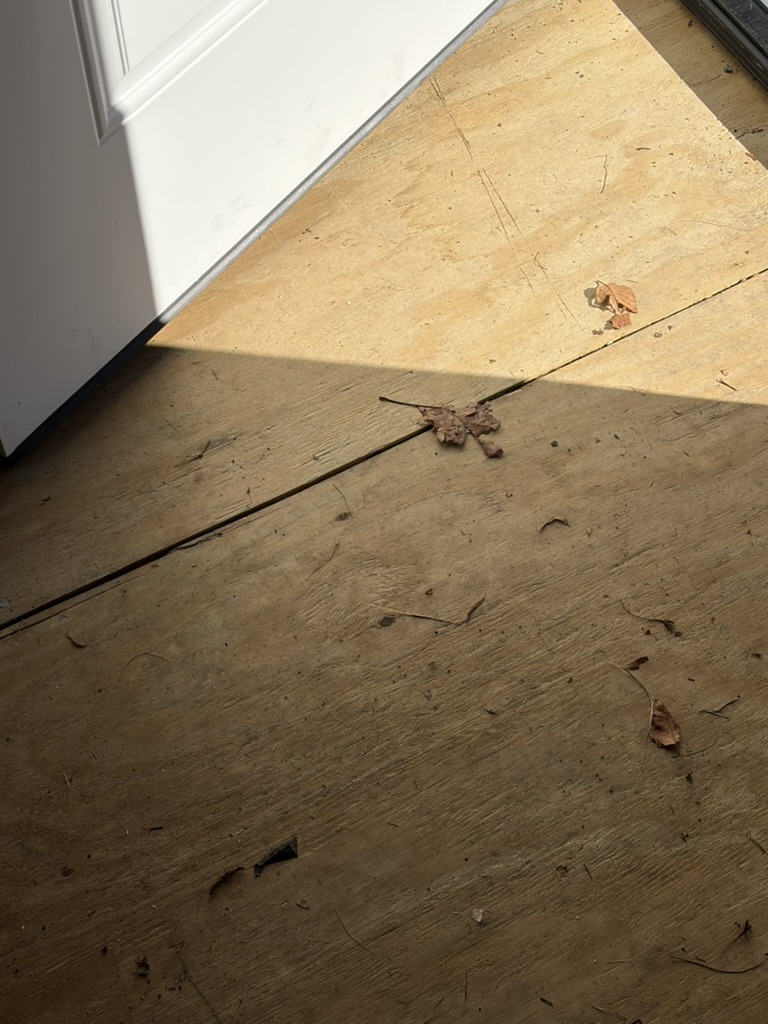
Plywood subfloor panels have 1/4" or greater gaps throughout the shed, worst at the entry threshold. Gaps have collected debris and panel edges are rough and uneven.
Assessment
APA guidelines recommend approximately 1/8" spacing. Gaps of 1/4"+ suggest poor layout, unsupported edges, or movement since installation. At the threshold this is a moisture-entry point at the highest-traffic location.
Recommended Correction
Verify edge support at worst seams, add blocking where unsupported, refasten panels, correct threshold transition.
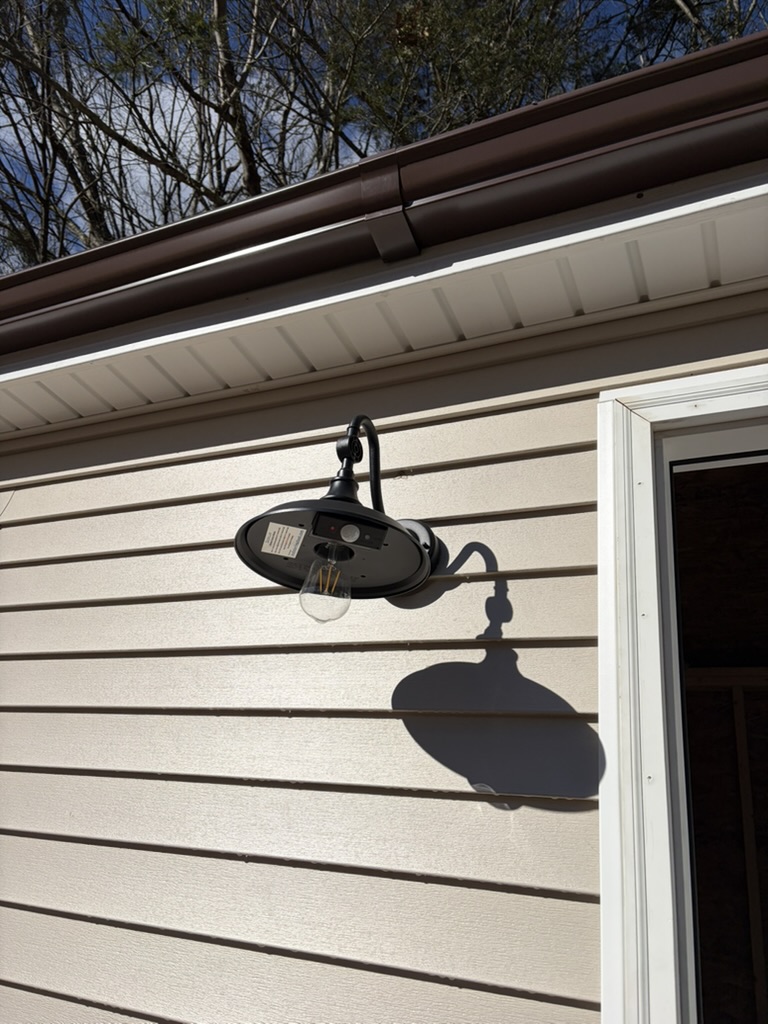
HIGH Issue 7: Gutter/Drainage — Leaking Joint Over Electrical Light
▼
Condition
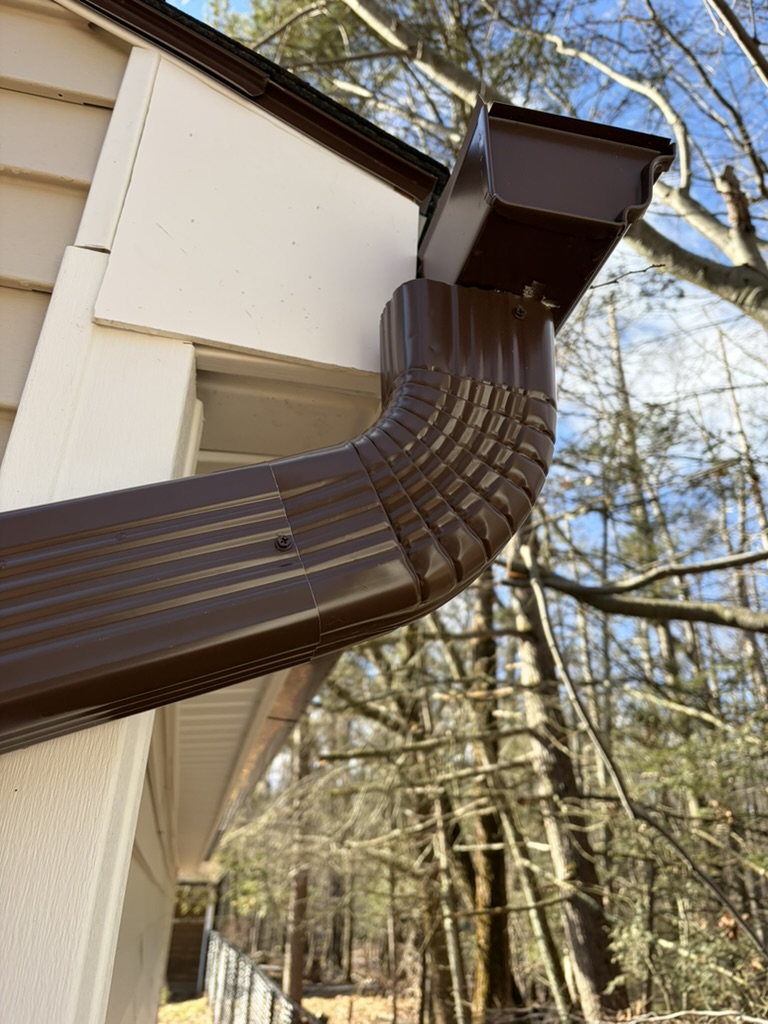
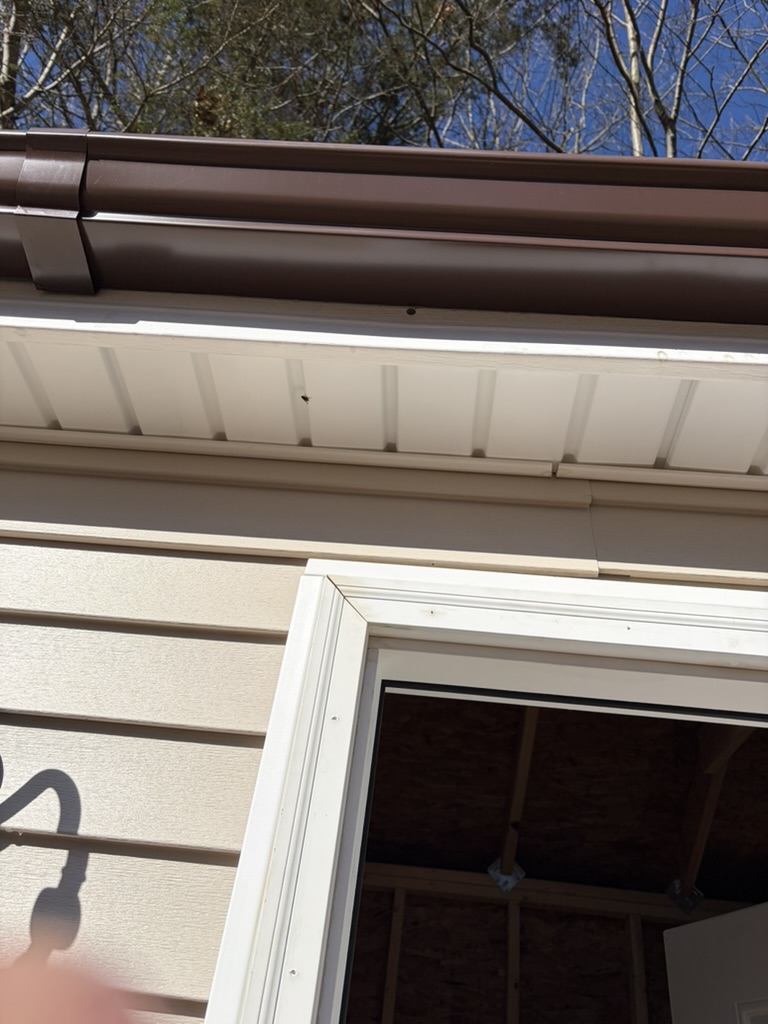
A gutter splice above the front entry leaks water directly onto a wall-mounted exterior light fixture. The downspout outlet is mis-sized. At the base, the downspout elbow is missing fasteners and discharges adjacent to the foundation.
Assessment
This is the clearest immediate safety-related condition because it combines uncontrolled water discharge with an exterior electrical fixture. The drainage deficiencies alone are moderate, but the electrical exposure elevates this to a priority repair. The fixture and junction box should be inspected for water intrusion and proper wet-location rating.
Recommended Correction
Reseal or replace the leaking gutter joint, install a properly sized outlet, add missing fasteners, extend discharge away from the base, and inspect the light fixture for water damage.
MODERATE Issue 8: Skylight Framing
▼
Condition
The roof framing member below the skylight shows multiple saw kerfs/notches cut into its top face near the corner. This appears to be a field adjustment to force the skylight fit rather than a properly framed rough opening.
Assessment
The kerfs appear consistent with a circular saw blade set too deep during roof decking cuts. While notching a framing member is a workmanship concern, shallow kerfs of this nature are unlikely to cause structural failure on their own. The skylight appears functional. This should be verified during roof framing work rather than treated as a standalone repair.
Recommended Correction
Verify the skylight is not leaking during roof framing work (Issue 2). If kerfs are deeper than they appear, sister a reinforcing member alongside. Replacing the framing member is unlikely to be necessary.
LOW Issue 9: Minor Finish & Workmanship Items
▼
Condition
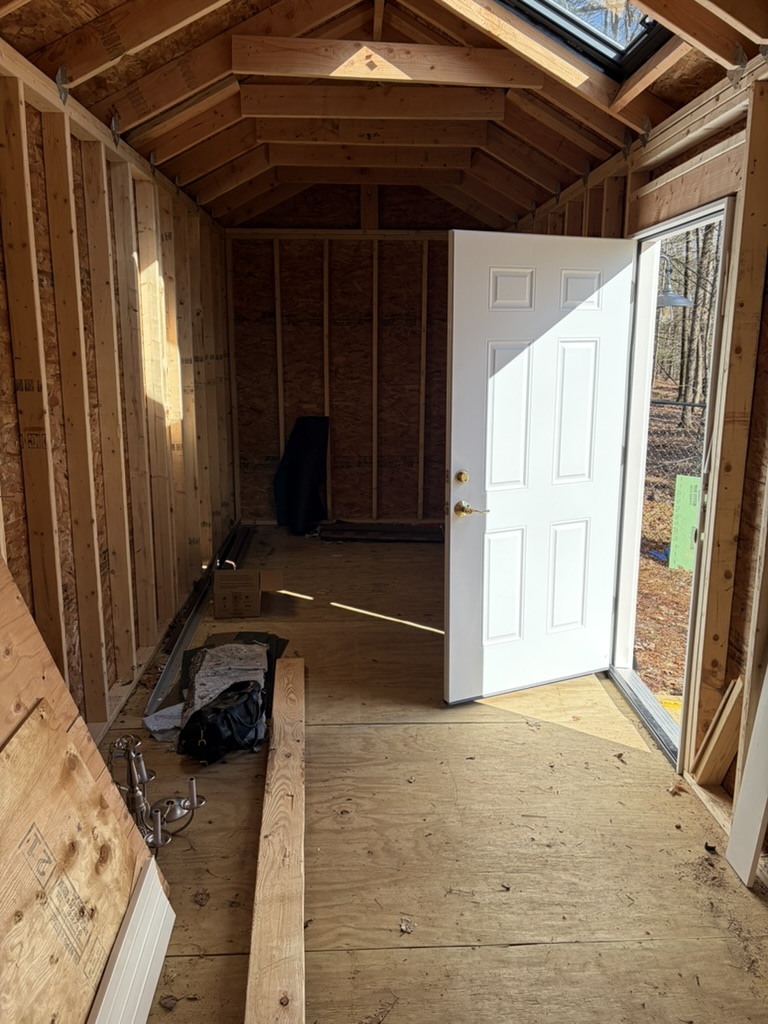
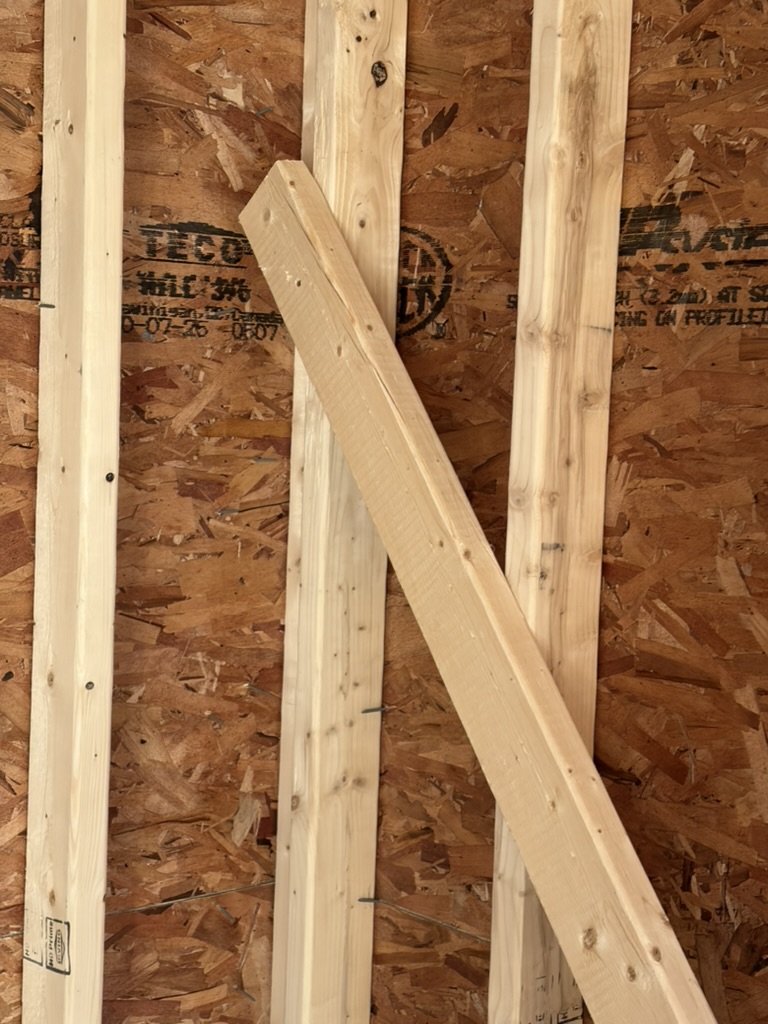
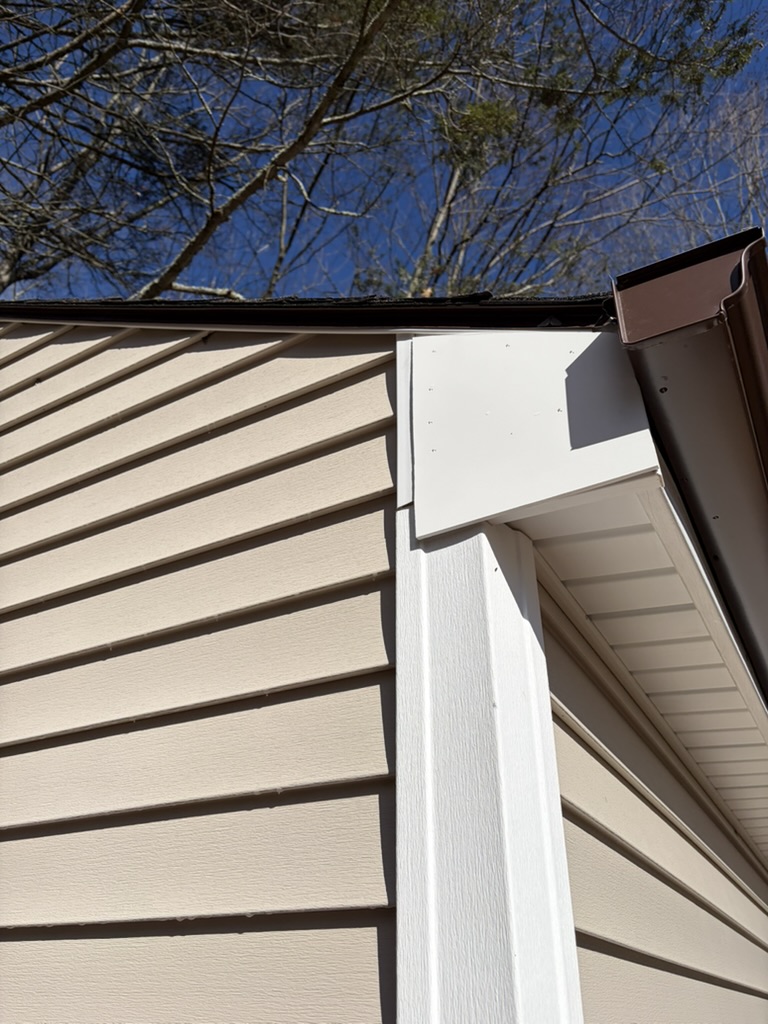
Vinyl siding is wavy and uneven. Siding nails penetrate through interior sheathing leaving sharp points. A broken wood fragment hangs from the base trim. Construction debris remained inside at completion.
Assessment
None of these items individually represent a structural emergency, except protruding nails which are a puncture hazard. Together they establish a pattern of workmanship quality consistent with the more significant deficiencies in Issues 1–8.
Recommended Correction
Clip or replace protruding nails, remove debris and leftover materials, remove hanging base trim fragment. Siding waviness is cosmetic and can be left as-is unless correction is desired.
Photo Library
57 on-site inspection photographs, grouped by issue. Click any photo to enlarge.
Repair Estimate Calculator
Check or uncheck issues to see how the total changes based on what you want to address.
| Include | # | Issue | Severity | Low Est. | High Est. |
|---|---|---|---|---|---|
| 1 | Foundation — re-level, extend pad, anchor | MOD | $1,500 | $2,500 | |
| 2 | Roof framing — ridge, rafters | HIGH | $1,500 | $3,500 | |
| 3 | Wall-to-roof enclosure gap | HIGH | $1,200 | $2,800 | |
| 4 | Door assembly — complete rebuild | HIGH | $800 | $1,800 | |
| 5 | Roof sheathing gaps | MOD | $300 | $900 | |
| 6 | Subfloor panel gaps | MOD | $500 | $1,200 | |
| 7 | Gutter/drainage + electrical | HIGH | $350 | $800 | |
| 8 | Skylight framing evaluation | MOD | $400 | $1,000 | |
| 9 | Minor finish items | LOW | $300 | $1,400 | |
| SELECTED TOTAL | $6,850 | $15,900 |
Code & Standards References
IRC (International Residential Code) sections and industry standards relevant to the documented issues. Click any reference for details.
Note: Whether the IRC formally applies to this specific structure depends on local jurisdiction. These references are cited as accepted best practices for wood-framed construction.